
This report focuses on ways to use land and ecosystem accounting techniques to describe and monitor the consequences of biodiversity loss in the coastal wetlands of the Mediterranean. These ecosystems are characterized by the close coupling of economic, social, and ecological processes, and any accounting system has to represent how these key elements are linked and change over time. This report discusses the importance of estimating the ecological and social costs of maintaining these systems as well as the problems related to providing monetary estimates of the services associated with wetlands. It also shows how individual wetland socio-ecological systems can be defined and mapped using the remotely sensed land cover information from Corine Land Cover.
The key messages that emerge from this work are:
- Ecosystem accounts are open frameworks that bring together different approaches to ecosystem assessment, such as those based on physical, monetary, or other criteria, and link them to efforts to value particular service outputs or the costs of ecosystem capital maintenance.
- Since they are consistent with and part of the UN SEEA system and the UN System of National Accounts (SNA), ecosystem accounts potentially provide a robust and systematic framework for policy makers, because of the association to well-established indicators such as GDP.
- To be most effective, accounting approaches must be implemented at different scales: (i) macro accounts can be developed with the support of Earth observation programmes (e.g. GEO, GMES) and statistical networks (e.g. Eurostat, UNCEEA, UNSD); (ii) micro‑scale accounts can be built at the level of individual public or private organisations and used to calculate complete ecosystem costs and benefits in the context of local needs such as infrastructure project assessments.
- The multi-functional character of ecosystems is a major issue for assessments. In many cases, ecosystem degradation results from the preference given to one or a very limited number of services: food, fibre, or energy crops in agriculture; timber in forestry; fish and fish farming; and navigation in estuaries or deltas. Such emphasis often means that stakeholders and decision-makers often overlook other services that generate ancillary products and public benefits, such as recreational or environmental regulation (e.g. formation of soil, water regulation, or carbon storage and sequestration). Accounts provide an overarching framework in which these multi‑functional issues can be addressed.
The calculation of the value of biodiversity and the costs that result from its loss is a formidable problem. The Economic of Ecosystems and Biodiversity (TEEB) needs both robust data and tools to produce these estimates which help people in their decision-making. This study shows how ecosystem accounting provides such a robust tool. Although this report is a study of wetlands, these tools is applicable to all type of ecosystem and can be used to promote a more holistic or ecosystem approach to policy and management.
Related Case Studies
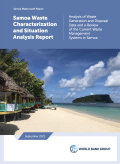
This report presents the findings of a study that includes an overview of the Samoan waste sector, current resource recovery, and institutional arrangements, private sector engagement and available infrastructure for both waste management and recycling.
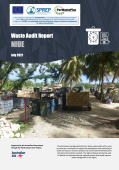
The report, prepared by SPREP in collaboration with (T+TI), presents the findings of the waste audit undertaken for the Pacific island nation of Niue.
This case study helps to understand the sectoral approach of inventories for persistent organic pollutants and the benefits of dynamic material and substance flow analysis in assessing POPs in the building and construction sector.
This case study was conducted to establish an inventory of different persistent organic pollutants (POPs) present in the transport sector in Nigeria, and dynamic substance flow analysis of major POPs following the provisions of the Polybrominated Diphenyl Ethers (PBDE) inventory guidance.