
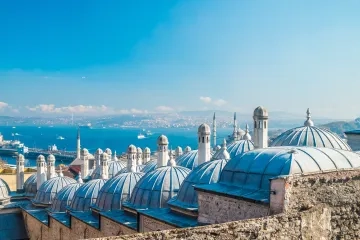
As part of the Fifth World Congress of Environmental and Resource Economists, the GGKP hosted a policy session on the topic of: "Moving Beyond GDP - Measuring Inclusive Green Growth".
How policy makers measure inclusive green growth has important implications for how we monitor the interactions between economic growth, social development and environmental sustainability. Additional research on and deeper understanding of these key linkages is crucial to help designing measurement and results frameworks for monitoring and evaluation so as to guide the development of sound green growth strategies and policies.
The aim of this session was to stimulate a debate amongst the policy and academic communities working on measurement, focusing on the need for more sustainable green growth indicators and opportunities for new measurements of economic growth, which capture more than GDP. In particular, the session focused on a number of research gaps in this area and invite panelists to debate solutions for addressing them. Debate questions included:
- How can we better integrate our measurement of the three pillars of green growth: environment, social and economic? Should we be integrating environmental and social outcomes into economic measures? Given valuation challenges, are there better approaches (e.g. dashboards of indicators)?
- How can we better measure economic opportunities (and costs) associated with the green economy, e.g. green jobs or environmental goods and services?
- Where are there major gaps in terms of coverage and methodology for measuring progress towards a green economy, and what opportunities exist for new investments in data collection, methodological work and indicator development?
- How can we assist countries in the collection of data which captures the environment and economic nexus? Are such data collection efforts realistic in developing countries? How do we weigh practical considerations (cost and measurement challenges) with the desire for accurate data? Will innovations in data collection, e.g. remote sensing, help? Can useful policy be implemented without data?
- How to link inclusive green growth measurement frameworks with the post-2015 agenda and the Sustainable Development Goals (SDGs)? How can we use the SDGs to drive forward green growth data collection efforts?
The session was moderated by Marianne Fay, Chief Economist of the Climate Change Group at the World Bank.
Panellists included:
- Ed Barbier, John S Bugas Professor of Economics, Department of Economics and Finance, University of Wyoming
- Carlo Carraro, President of the Universita' Ca' Foscari Venezia, Professor of Environmental Economics and Econometrics
- Geoff Heal, Donald C. Waite III Professor of Social Enterprise at Columbia Business School
- Sheng Fulai, Head of the Research and Partnerships Unit, UNEP
Speaker Bios
Marianne Fay (Moderator)
 Marianne Fay is Chief Economist of the Climate Change Group of the World Bank and co-Director of the World Development Report 2010 on Climate Change. At the World Bank she has served in multiple regions, including Eastern Europe and Central Asia, Latin America and the Caribbean, and Africa, working on infrastructure, urbanization, and more recently on climate change and green growth. Her research has explored the role of infrastructure and urbanization in development, with a particular focus on urban poverty, climate change, and green growth, on which she has authored numerous articles and books. Most recently she led the World Bank’s flagship report for Rio+20, Inclusive Green Growth: The Pathway to Sustainable Development. Ms. Fay holds a PhD in Economics from Columbia University.
Ed Barbier
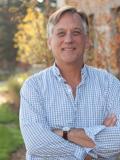 Edward B. Barbier is the John S Bugas Professor of Economics, Department of Economics and Finance, University of Wyoming. His main expertise is natural resource and development economics as well as the interface between economics and ecology. He has served as a consultant and policy analyst for a variety of national, international and non-governmental agencies, including many UN organizations, the OECD and the World Bank. Professor Barbier is on the editorial boards of several leading economics and natural science journals, and he appears in the 4th edition of Who’s Who in Economics. In 2008, he was named by Cambridge University as one of the 50 most influential thinkers on sustainability in the world, and among his honors and awards, he has received the 1991 Mazzotti Prize (Italy) for contributions to economics and ecology. Professor Barbier has authored over 200 peer-reviewed journal articles and book chapters, written or edited 21 books, and published in popular journals and media. His books include Blueprint for a Green Economy (with David Pearce and Anil Markandya, 1989), Natural Resources and Economic Development (2005), A Global Green New Deal (2010), Scarcity and Frontiers: How Economies Have Developed Through Natural Resource Exploitation (2011), Capitalizing on Nature: Ecosystems as Natural Assets (2011) and A New Blueprint for a Green Economy (with Anil Markandya, 2012).
Carlo Carraro

Professor Carlo Carraro is President of the Universita' Ca' Foscari Venezia, where he is also Professor of Environmental Economics and Econometrics. He holds a Ph.D. from Princeton University. In 2008, he has been elected Vice-Chair of the Working Group III and Member of the Bureau of the Nobel Laureate Intergovernmental Panel on Climate Change (IPCC). He has been working as IPCC Lead Author since 1995.
Professor Carraro is Director of the Climate Change and Sustainable Development Programme of the Fondazione Eni Enrico Mattei (FEEM), member of the Executive Board of the Euro Mediterranean Centre for Climate Change (CMCC), and Director of the International Centre for Climate Governance (ICCG).
Carlo Carraro is member of the Green Growth Knowledge Platform (GGKP) Advisory Committee and of the International Advisory Board of the Harvard Environmental Economics Program (HEEP). He is also member of the Scientific Committee of the International Human Dimensions Programme (IHDP) and of the Ifo Institute for Economic Research, Munich. He is research fellow of the CEPR (Center for Economic Policy Research), London, CESifo (Center of Economic Studies ), Munich, and Associate Research Fellow, CEPS (Center of Economic Policy Studies ), Bruxelles.
Geoffrey Heal
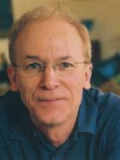 Geoffrey Heal, Donald C. Waite III Professor of Social Enterprise at Columbia Business School, is noted for contributions to economic theory and resource and environmental economics. He holds bachelors (first class), masters and doctoral degrees from Cambridge University, where he studied at Churchill College and taught at Christ’s College. He also holds an Honorary Doctorate from the Universite´ de Paris Dauphine. Author of eighteen books and about two hundred articles, Professor Heal is a Fellow of the Econometric Society, Past President of the Association of Environmental and Resource Economists, recipient of its prize for publications of enduring quality and a Life Fellow, a Director of the Union of Concerned Scientists and a founder and Director and chairman of the Board of the Coalition for Rainforest Nations, developers of the REDD policy for reducing deforestation by awarding carbon credits for forest conservation. Recent books include Nature and the Marketplace, Valuing the Future, When Principles Pay and Whole Earth Economics (forthcoming). Professor Heal chaired a committee of the National Academy of Sciences on valuing ecosystem services, was a Commissioner of the Pew Oceans Commission, is a coordinating lead author of the IPCC, was a member of President Sarkozy’s Commission on the Measurement of Economic Performance and Social Progress, was a member of the advisory board for the World Bank’s 2010 World Development Report and the United Nations Environment Program’s 2011 Human Development Report, and acts as an advisor to the World Bank on its Green Growth project. He is also a Director of Public Business, a foundation that promotes in-depth public interest journalism. He has been a principal in two start-up companies, one a consulting firm and the other in software and telecommunications, and until recently was a member of the Investment Committee of a green private equity group. He teaches MBA courses on “Current Developments in Energy Markets,” “Business and Society: Doing Well by Doing Good?” and “The Business of Sustainability” and advises doctoral students interested in sustainability.
Fulai Sheng
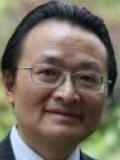 Sheng Fulai is currently the head of the Research and Partnerships Unit of UNEP based in Geneva. His areas of expertise include integrated public policymaking, international payments for ecosystem services, and integrated economic and environmental accounting. He is currently the technical manager of the UNEP-led Green Economy Initiative, which aims to motivate and enable governments and businesses to invest in environmental sectors such as renewable energy, green buildings, public transport, sustainable agriculture, and watersheds. Mr. Sheng holds a Masters degree in economics from the Shanghai University of Finance and Economics (1985). Prior to joining UNEP in 2005, for over twenty years, he had served the Chinese Ministry of Finance, the World Bank, the World Wide Fund for Nature, and Conservation International. His major publications include: Real Value for Nature – An Overview of Global Efforts to Achieve True Measures of Economic Progress; Comparative Assessment of Development Options; Macroeconomic Policies, Poverty and the Environment (co-author); Rights, Wants and Needs: Economic Instruments and Biodiversity Conservation, and Integrated Policymaking for Sustainable Development: A Reference Manual (co-author).