
This tool is a unique and interactive resource that assists decision-makers address urban challenges with evidence-based policies.
Cambodia is one of the fastest-growing economies in Southeast Asia, with an average annual GDP growth rate of 7.7% between 1995 and 2018. The overall objective of this study is to develop an investment project proposal that can facilitate the deployment of electric motorcycles (EM) in Cambodia and contribute to the reduction of GHG emissions in the transport sector
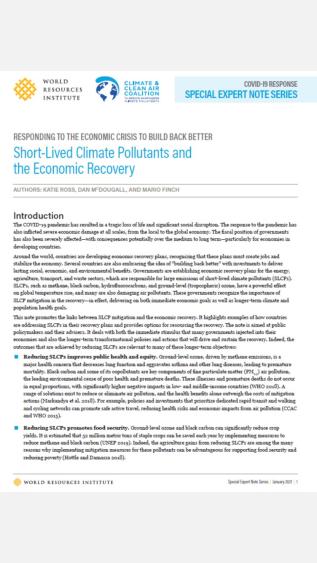
This note promotes the links between short-lived climate pollutants (SLCP) mitigation and the economic recovery. It highlights examples of how countries are addressing SLCPs in their recovery plans and provides options for resourcing the recovery. The report is aimed at public policymakers and their advisers.
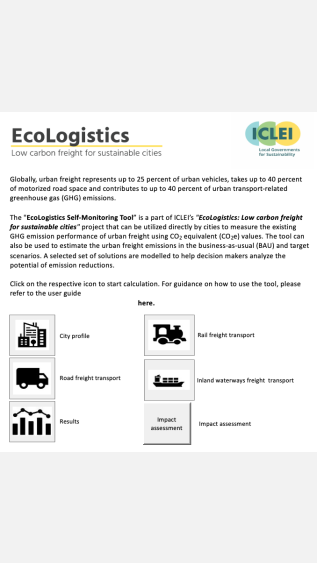
The EcoLogistics Self-monitoring tool is a calculation tool developed for cities to estimate their greenhouse gas emissions from urban freight transport.
This paper outlines the best ways countries can use ocean-based action to curb greenhouse gas emissions and better adapt to the impacts of climate change. The paper focuses on four ocean-based subsectors that have the greatest potential to curb emissions and deliver significant other benefits: marine conservation (coastal and marine ecosystem restoration and protection), oceanic and coastal fisheries, marine transport, and ocean-based renewable energy.

To electrify ridehailing vehicles at scale, key industry stakeholders must collaborate. Analyzing 100 million miles of actual electric and gasoline ridehailing vehicle data, this report offers actionable recommendations for stakeholders to address three key barriers to implementation. Rocky Mountain Institute collaborated with General Motors to better understand the challenges and opportunities of transportation network company (TNC) electrification by evaluating a year of actual operational data—of both EVs and internal combustion engine (ICE) vehicles operating in TNC services.