
This Report Financing a Resilient Urban Future: A Policy brief on World Bank and global experience on financing climate-resilient urban infrastructure draws on World Bank experience and datasets and a review of academic and grey literature on financing three core urban infrastructure systems – water, transport, and energy.
This report features how Münster, Germany, is developing a people-centered transport system, with efforts to improve accessibility, connectivity, inclusivity, and sustainability.
This policy brief, How to Better Reflect Transport in Climate Action Efforts, addresses the transport sector, the second-largest emitting sector in the world, and how to streamline it into the climate change policy process.
This report looks at a broad range of policies that could have potential direct and supply chain impacts on the level of greenhouse gas emissions produced at a national level.
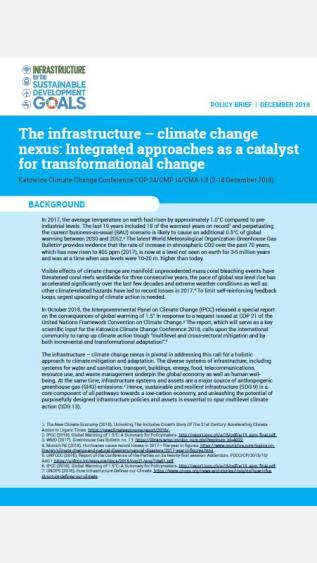
This policy brief, The Infrastructure And Climate Change Nexus: Integrated approaches as a catalyst for transformational change, explores interlinkages between climate change mitigation and adaptation, and diverse forms of infrastructure. Given that infrastructure in every sector has climate implications, the brief raises awareness about the need for an integrated approach to the planning and development of resilient, low-carbon infrastructure assets to achieve the targets enshrined in the Paris Agreement and to boost climate-smart growth.
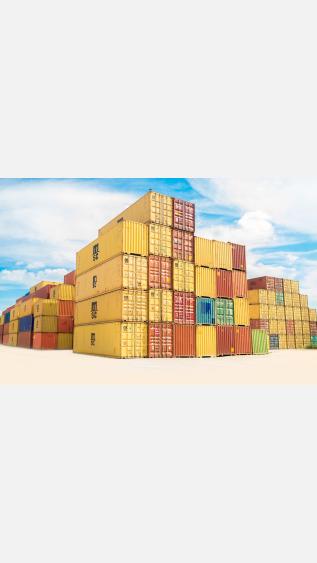
On 14 Nov 2018 (3:00 PM CET), UNFCCC and GIZ are holding the sixth episode of their webinar series, "Methodologies for Baselines and Monitoring in the Transport Sector". This episode will focus on "Freight mode shift from road to other modes".