
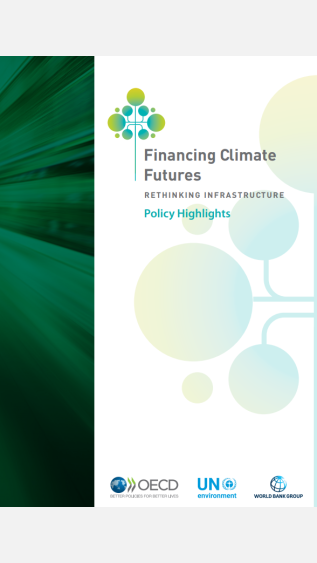
This report lays out an agenda to enable societies around the world to undertake the kind of systemic actions that the transformation towards a low-emission, resilient future will require. It highlights 6 transformative areas and 20 actions that are key to aligning financial flows with climate and development goals in the areas of planning, innovation, public budgeting, financial systems, development finance and cities.
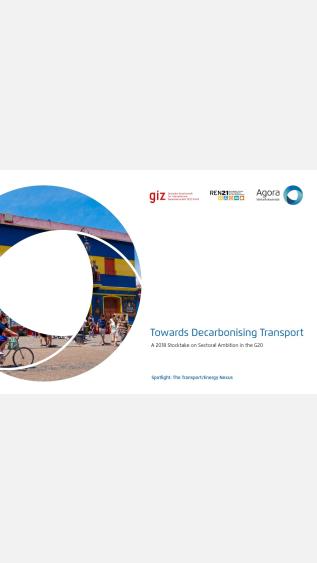
This study provides a clear picture of the state of G20 transport emissions, analyses already existing approaches for decarbonising the transport sector and stresses the urgency of putting ambitious climate action on the political agenda. It includes factsheets on each G20 member that shed light on the specific situation and challenges in each country, including existing goals and efforts. The report concludes by comparing stated ambition with implemented policies and actions while also considering required global reductions in the transport sector to keep the global temperature rise well below 2 degrees Celsius.
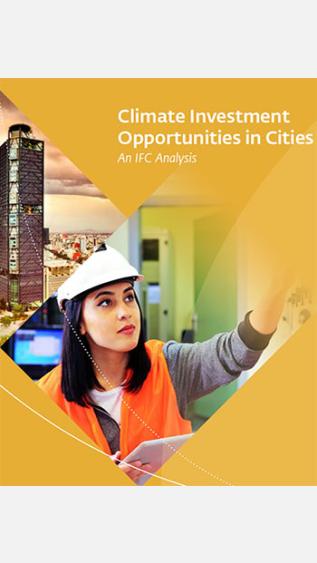
This report provides investment potential estimates across six key sectors (waste, renewable energy, public transportation, water, electric vehicles, and green buildings). Sector-specific investment potentials are estimated at the global and regional levels. The report also addresses urban resilience, financing solutions, and includes six deep dives into specific cities – one from each region – representing various sizes and stages of development:
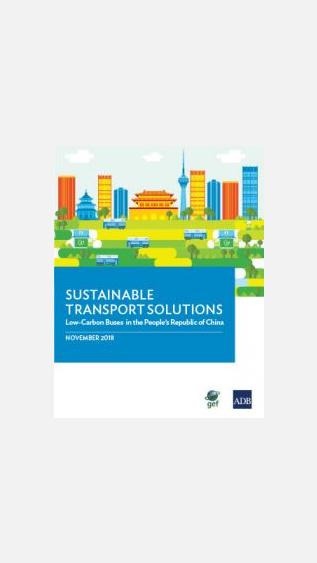
Low-carbon buses (LCBs), which include hybrid, plug-in hybrid, and different types of electric buses, have been promoted widely in cities in the People’s Republic of China (PRC). This report summarizes the experience of 16 cities in the PRC with an urban bus fleet of 70,000 units, and includes performance data on around 20,000 LCBs, of which nearly 10,000 are pure electric vehicles. The objective of this report is to show real world performance data on LCBs in the PRC, their environmental and financial impact, as well as policies used to promote LCBs.

The report Mission Possible: Reaching net-zero emissions from harder-to-abate sectors by mid-century describes the technical and economic feasibility of hard-to-abate sectors to reach net-zero carbon emissions, the way to manage the transition to net-zero carbon emissions in heavy industry and heavy-duty transport and the measures policymakers, investors, businesses and consumers must follow to accelerate the change.
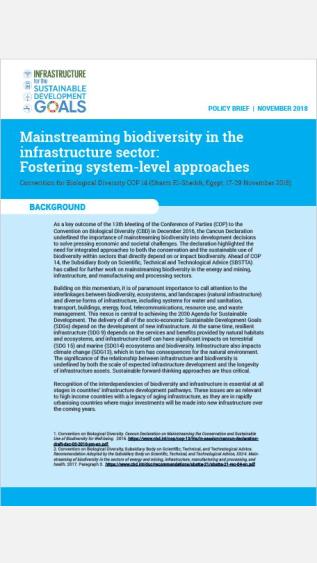
This policy brief, Mainstreaming Biodiversity In The Infrastructure Sector: Fostering system-level approaches, explores interlinkages between biodiversity, ecosystems, and landscapes and diverse forms of infrastructure. Recognising that this nexus is central to achieving the 2030 Agenda for Sustainable Development, it calls attention to the need for an integrated approach to infrastructure planning and development to mainstream biodiversity in the infrastructure sector.