
"It is necessary to ensure that the economic, social and environmental implications of potential infrastructure projects are considered holistically from the earliest stages of planning and development. It is also essential for ensuring coordination between different infrastructure sectors such as transport, energy and water," says Fulai Sheng, Senior Economist at UN Environment.
This Country Planning Framework (CPF) outlines the five-year program and joint commitment that the Global Green Growth Institute (GGGI) and the Government of Nepal (GoN) have pledged to achieve in the period 2017-2021.
The working paper, Identifying Promising Policies and Practices for Promoting Gender Equity in Global Green Employment, is a synthesis of existing literature for promoting and optimizing women’s employment in manufacturing, construction and transportation.

Project Drawdown brought together a qualified and diverse group of researchers to identify, research and model the most substantive, existing solutions to address climate change and achieve the Sustainable Development Goals (SDGs). These range from bioplastics to artificial leafs to building automation, clean cookstoves, coastal wetlands, living buildings, cows walking on beaches, and more.
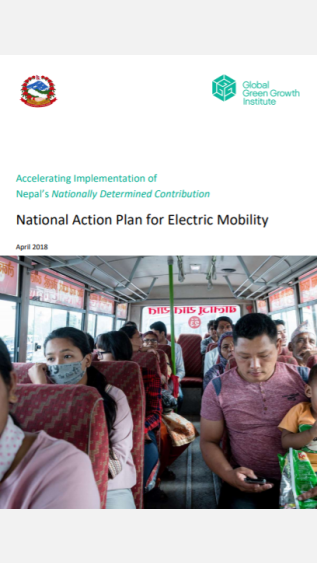
Working under the overall direction of the Ministry of Forests and Environment and in partnership with the Ministry of Physical Infrastructure and Transport, the Global Green Growth Institute (GGGI) launched the Electric Mobility Program in 2017, to support a transition towards clean and sustaina
This report, Decarbonising Maritime Transport, examines what would be needed to achieve zero CO2 emissions from international maritime transport by 2035.