

Electric vehicles are a potentially significant route towards low-carbon transport but widespread adoption of e-mobility will lead to greater consumption of electricity. Existing electricity systems will need to be reconfigured to meet these needs if reliance on fossil fuels is not to increase. In a paper looking at the potential of Smart Grids and electric vehicles to change and improve electricity systems worldwide, the International Transport Forum found that:
While international transport – aviation and maritime shipping – is an important facilitator and driver of trade, it also contributes significantly to climate change. This paper states that the regulation of greenhouse gas (GHG) emissions from international transport would help mitigate climate change, as well as support a green economy transition.
This paper explores the value of green growth from the perspective of sustainable development practitioners. First, it provides a brief definition of green growth, and why the concept is relevant for meeting Africa’s challenges. It then discusses how green growth can be achieved, highlighting some of the primary tools for achieving it, and then discussing focal areas that we believe will have the greatest impacts by spurring growth sustainably. Finally, it discusses how the AfDB has promoted green growth through its own initiatives. Boxes throughout the paper provide examples of the AfDB’s promotion of green growth in its project portfolio.
This paper discusses the extent to which the predicted growth of aviation in a carbon-constrained world is possible given the known operational and technological options, and in particular the extent to which aviation biofuels form part of the answer. Even without a carbon constraint, aviation faces significant challenges. If capping global greenhouse gas emissions remains a serious goal, then aviation‘s problems intensify. With these challenges in mind, some fundamental questions are raised, for instance:
The book presents a major meta-analysis of 'value of a statistical life' (VSL) estimates derived from surveys where people around the world have been asked about their willingness to pay for small reduction in mortality risks. The analysis seeks to explain the differences in the estimates, for example across countries. Differences in incomes and the magintude of the risk reduction people have been asked to value were found to be the factors having the strongest impact on VSL, but a number of other policy-relevant factors are also important. Based on the meta-analysis, and a broad review of the literature, the book also presents clear advice on how VSL values best can be used in assessments of environmental, health and transport policies, such as in cost-benefit analyses. Using explicit VSL estimates to quantify the benefits to society of fatality risk reductions can play an important role in the development of more cost-effective public policies.
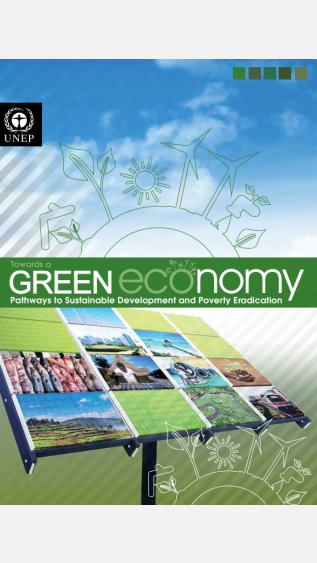
The Green Economy Report is compiled by UNEP’s Green Economy Initiative in collaboration with economists and experts worldwide. It demonstrates that the greening of economies is not generally a drag on growth but rather a new engine of growth; that it is a net generator of decent jobs, and that it is also a vital strategy for the elimination of persistent poverty. The report also seeks to motivate policy makers to create the enabling conditions for increased investments in a transition to a green economy.
The report includes chapters on the following areas:
- Agriculture
- Fisheries
- Water
- Forests
- Renewable Energy
- Manufacturing
- Waste
- Buildings
- Transport
- Tourism
- Cities
- Modelling
- Finance