

Transport is a fast growing sector. A steadily increasing motorization along with urbanization is a trend that can be observed in most developing countries. This and the oil dependence of the transport sector leads to considerable growth rates of carbon emissions. Action to stop this trend is urgently needed. This paper shows how national and/or urban low-carbon transportation policies could help countries to win the battle and achieve a smart, sustainable economic growth while at the same time stabilizing and later reducing transport emissions. Sustainable Development Policies and Measures in the transport sector include a variety of co-benefits, e.g. reduced air pollution, social equity and economic development. In the context of the global economic crisis such measures promote economic growth, social stability and also can be implemented at reasonable costs.
Smart ICT and Internet applications have the potential to improve the environment and tackle climate change. Top application areas include manufacturing, energy, transport and buildings. Information and communication also foster sustainable consumption and greener lifestyles. At the same time, direct and systemic impacts related to the production, use and end of life of ICTs require careful study in order to comprehensively assess “net” environmental impacts. A better understanding of smart ICTs provides policy makers with options for encouraging clean innovation for greener economic growth. This summary was prepared by Eldis.
Climate change (CC) adaptation and mitigation are identified as priorities in the Updated 2004 – 2010 Medium -Term Philippine Development Plan (MTPDP), in the light of increased occurrence of extreme weather events that are disturbing not only communities and livelihoods, but also the natural resource base, thereby critically threatening the pace of economic growth and development. Recognizing this, the Climate Change Act 1 of 2009 mainstreams CC adaptation and mitigation into government policies.
Against this background, the Philippine Government through its Department of Trade and Industry (DTI) requested GTZ to integrate measures for CC mitigation and adaptation into the Micro, Small and Medium Enterprises (MSME) Development Strategy for the period 2010 to 2016.
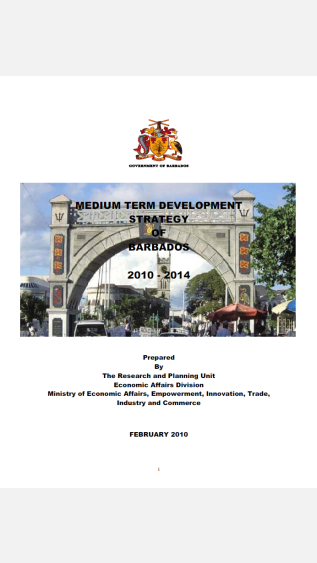
Medium Term Development Strategy of Barbados 2010-2014 (MTDS) sets out a broad framework of policies and programmes, which the government will seek to pursue over the period 2010 – 2014.
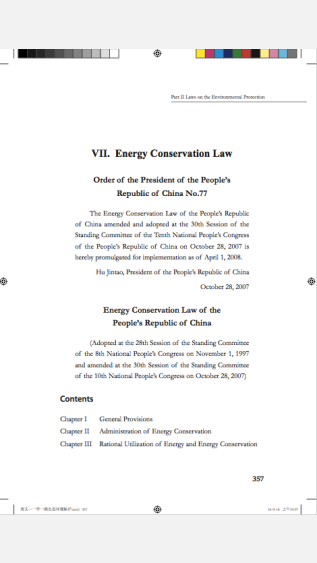
The Energy Conservation Law of the People's Republic of China is formulated for the purpose of promoting energy conservation in the whole society, improving energy utilization efficiency, protecting and ameliorating the environment, and striving for all round, balanced and sustainable development of the economy and the society.