
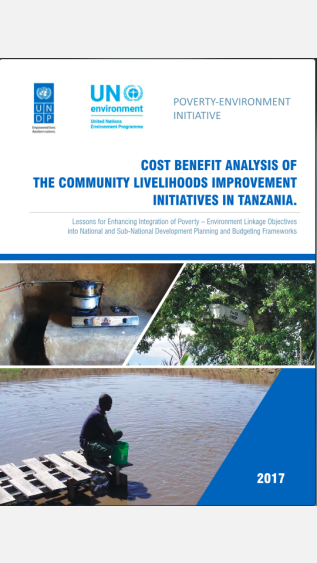
The report presents findings of the economic analysis for the Pro-poor Economic Growth and Environmentally Sustainable Development Project, which is a joint venture between the Government of the United Republic of Tanzania and the United Nations Development Programme (UNDP), and the United Nations Environment Programme (UNEP).
Bangladesh has made important progress in a number of areas relating to environmental management but this has not matched the progress with the growth and poverty reduction agenda. Importantly Bangladesh is yet to adopt formally a “green growth strategy” that fully reconciles the development agenda with the protection of the environment. In the absence of the green growth strategy and associated regulations, policies and institutions, the costs of environmental degradation have grown over time. Additionally, the adverse effects of climate change are mounting and creating substantial downside risks and vulnerabilities. Against the backdrop of this, the government’s preparation of Vision 2041 under which Bangladesh is envisaged to reach World Bank-defined high income threshold by FY2041 and eliminate absolute poverty provides an important opportunity to take a fresh look at the environmental degradation and climate change risks.
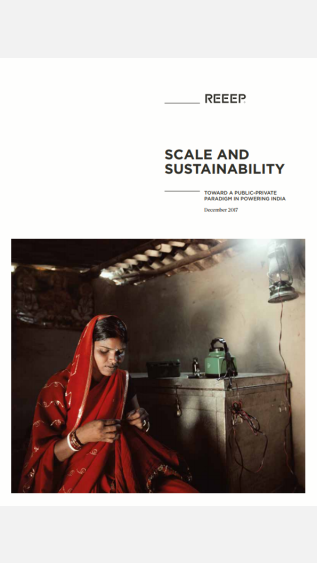
The paper Scale and Sustainability: Toward a Public-Private Paradigm in Powering India assesses the Decentralised Renewable Energy (DRE) market in India by looking at the supply, demand and framework conditions for the sector, and spells out potential approaches to levelling the playing field.
The Briefing Paper Accelerating Green Infrastructure Financing in Mexico: Towards Sustainable Economic Growth looks at the rationale for a new approach and the case for a green investment strategy.
International Climate Policy (ICP) is a bi-monthly magazine published by the International Center for Climate Governance (ICCG), covering trends around international and domestic climate and energy policies, as well as carbon markets.
This report provides options for standardisation examined by the ISO 14097 working group. It is based on a review of more than 130 financial institutions’ actions and initiatives on the integration of climate-related issues and current standards and disclosure frameworks aiming at improving financial institutions' practices and its comparability.