

A lot has been said about the surprise results coming in from recent elections and referendums across the globe, and many point to the same thing: growing dissatisfaction and disenchantment with the status quo. Despite rapid progress – or at least the appearance of progress – since the close of World War II, the basic tenets of our prosperity including free trade, free markets and globalization writ large are being called into question.
And perhaps justly so. In spite of the large uplift of population from absolute poverty levels – principally in China but across the emerging economies – social inequality between and within countries has rarely been as high, with the top 8 income earners in the world now grossing the equivalent of the bottom 3.6 billion of the world population.
While the world needs to invest massively in renewable technologies, such as solar or wind energy, to address climate change and the growing demand for energy, the key actors of this transition - small innovative cleantech companies - are having a hard time to get funded.
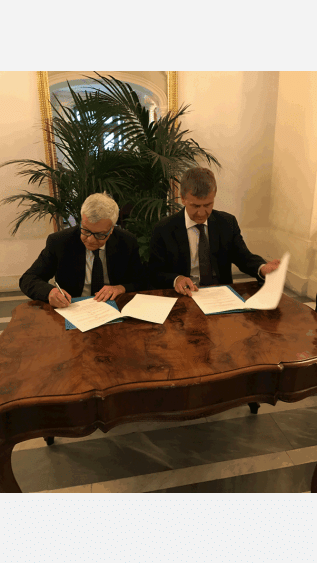
Rome, 6 February 2017 – Italy's Environment Minister Gian Luca Galletti and Erik Solheim, Head of UN Environment, today signed a new agreement to intensify collaboration on pressing environmental issues, such as clean energy and environmental education.

Digital finance is the unexpected revolutionary – but which side will it take? With the help of digital finance, urbane consumers can glide gracefully and seamlessly through their shopping experiences, migrants far from home can move hard-earned money cheaply to their families, small businesses can access credit lines in minutes through big data-driven profiling, and savers can navigate their investment opportunities with pinpoint accuracy. Will digital finance, then, deliver an all-purpose public good, or do we first need to manage possible constraints or even downsides?
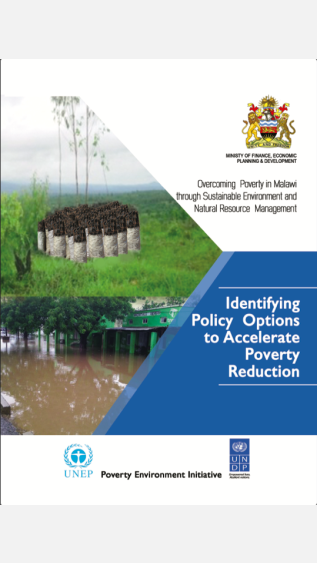
This report presents insights from a series of investigations to explore the poverty-environment nexus in Malawi and to identify sustainable pathways for poverty reduction by quantifying poverty and environment linkages. The study was commissioned by the Government of Malawi through the Ministry of Finance, Economic Planning and Development with financial and technical support from the UNDP-UNEP Poverty-Environment Initiative.

The Belmont Forum and NORFACE launch the Programme ”Transformations to Sustainability” (acronym: T2S). T2S will contribute to re-structuring the broad field of sustainability research by placing social science and humanities at the heart of interdisciplinary research in a step change in scale and scope for research programming on this topic.