
This report provides the first-ever public expenditure review (PER) for environment and natural resources in Rwanda. It was written under the theme: “Putting environment on budget.” The objective was to evaluate the appropriateness in the use of funds in the environment sector.
This training manual on how to carry out a "Public Expenditure Review" was commissioned by the Rwanda Environment Management Authority (REMA) in support of the implementation of the Poverty-Environment Initiative (PEI). Broadly, the initiative aims to enhance the contribution of sound environmental management to poverty reduction, sustainable economic growth, and the achievement of the Millennium Development Goals.
This policy brief provides the first-ever public expenditure review for the environment and natural resources in Rwanda. It was written under the theme: “Putting environment on budget.”
The scope of this study includes a review of public expenditure in the environment and natural resources sector, encompassing expenditure incurred by ministries, government departments and other agencies, and the local administration at the Dzongkhag and Geog levels on environment-related interventions along with all donor-supported projects of the environment sector.
This publication provides an overview of a "Public Environmental Expenditure Review (PEER)", in the context of how it examines government resource allocations within and among sectors, and/or at national and subnational levels of government, and assesses the efficiency and effectiveness of those allocations in the context of the environmental management framework and priorities. In addition, the publication details how a PEER identifies reforms needed to improve the effectiveness, efficiency, and sustainability of public spending for environmental management.
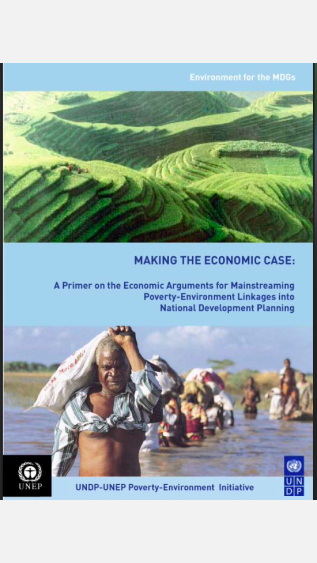
This primer provides guidance on presenting evidence about the economic, development, and poverty reduction benefits of the environment to public sector decision-makers, so as to justify and promote “environmental investment”.