

This blog was originally published on OECD Environment Focus on 2 December 2020. By Andrew Prag and Guy Halpern, OECD Environment Directorate Almost all economic sectors have suffered due to the evolving COVID-19 crisis. For the oil and gas industry, already battered on one side by low prices due to an oil price war between Russia and Saudi Arabia, and on the other by the push to decarbonise the global economy, the crisis hit at an especially challenging time.
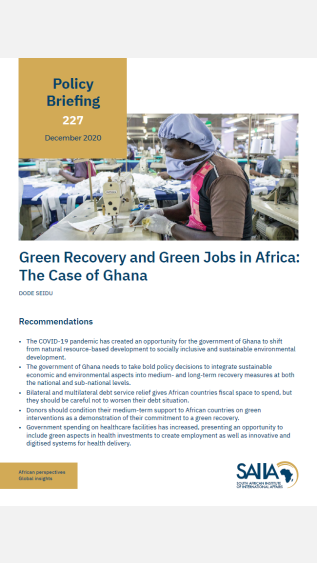
This paper shows that the Government of Ghana has an opportunity, despite the COVID-19 pandemic, to implement a green recovery through its economic revitalization programme.
This report showcases 13 projects covering eight fields, namely, biodiversity and ecosystem, clean energy, clean water, sustainable transportation, solid waste treatment, sustainable consumption and production, green buildings, and corporate social responsibility.
The Global Green Growth Institute (GGGI) is developing a Simulation Tool based on coupled system dynamics models for the different indicators of the Green Growth Index. As illustrated in this technical report, such models are very complex but, at the same time, extremely useful in exploring relevant scenarios on future implications of policy and investment decisions on green growth transition.
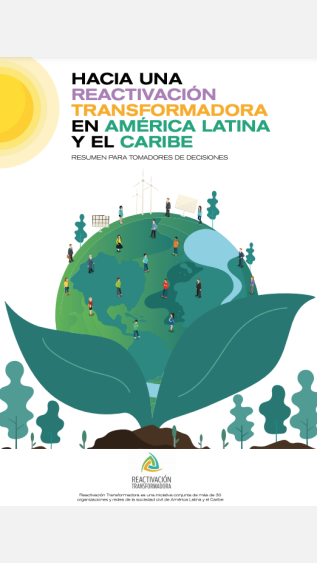
The report presents three routes to guide government responses towards a transformative economic reactivation, including sustainable development, decarbonisation, and governance. Additionally, it presents 57 public policy recommendations for eight sectors, spanning both rural and urban contexts, in order to pave the way towards a transformative reactivation in Latin America and the Caribbean.
This report lays out a strategy for putting Americans back to work building a vibrant 21st century U.S. economy based on advanced technologies, good jobs, clean energy, climate safety, and economic security.