
This White Paper provides solutions for GPP and addresses issues linked to the lacking integration of sustainability and circular economy criteria in GPP and the provision of public services. It also highlights the need to develop the capacity of private actors to adopt eco-innovation and green energy in order to participate in green e-tenders.
The first of four Thematic Working Groups created by the Interreg MED's Green Growth community focused on Sustainable Consumption and Production by enhancing Resource Efficiency in the Mediterranean agrofood sector as well as in urban areas through the implementation of the Smart City Concept.
- Measuring their environmental footprint and resource efficiency;
- The use of low-cost, low-tech, labour-intensive, and rudimentarily-equipped greenhouses;
- The lack of energy efficiency and renovation of EU buildings.
It then presents the projects' solutions and the benefits of resource efficiency for the environment and the economy. The projects were monitored according to the EU CEAP's indicator framework.
This report aims to: (1) Understand the perceived benefits and risks, including ethical issues, as well as the levels of acceptance and support for joint projects in renewable energy (concentrated solar power and wind energy projects) among the public in various EU countries; (2) Understand the motives for potential rejection of cooperation mechanisms; and (3) Explore the determinants of public acceptance and support for cooperation mechanisms. It examines public perceptions of two potential joint projects set up under the Renewable Energy Directive in Spain, Germany, the Netherlands, and Romania.
This paper introduces the methods and data used in Energy Access Explorer, an online, open-source, interactive platform that analyzes spatial data related to energy supply and demand and a population’s unique attributes. The Energy Access Explorer also incorporates demographic data and data on social and productive uses to visualize demand for energy services. Together, these supply and demand indicators enable more comprehensive energy planning.
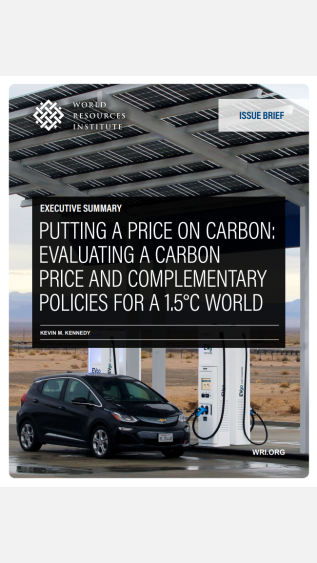
This paper Putting a Price on Carbon: Evaluating A Carbon Price and Complementary Policies for a 1.5° World compares what recent empirical evidence and modeling efforts tell us about the effectiveness of a carbon price in reducing emissions and shifting to low-carbon technologies with what deep decarbonization studies state regarding the pathways for meeting climate goals.
The Updated policy pathways for the energy transition in Europe and selected European countries, MUSTEC takes the first steps towards identifying the potential future role for dispatchable renewables – specifically CSP with thermal storage – as a function of policy decisions that either increase the need for power system flexibility (e.g. fluctuating renewables) or provide flexibility (e.g. storage, dispatchable renewables, flexible demand).