
While other sectors are accelerating their emissions reductions, the share of emissions from heavy industry is projected to increase dramatically under business as usual. As such, industry has a key role to play in the decarbonisation of the European economy to fulfill the EU’s commitments under the Paris agreement. This report explores the technical and economic aspects of the transition and suggests methods to be employed to enable climate neutrality in heavy industry.
This report reviews the state of Italy's fossil-fuel subsidies and their progress in reforming their policies to reduce wasteful consumption. This is part of the G20's framework of voluntary peer reviews on fossil-fuel subsidies.
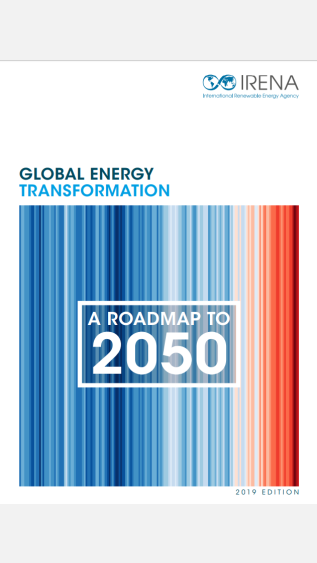
Increased use of renewable energy, combined with intensified electrification, could prove decisive for the world to meet key climate goals by 2050. This study highlights immediately deployable, cost-effective options for countries to fulfill climate commitments and limit the rise of global temperatures.
Indonesia, together with Italy, announced in February 2017 that they would undertake a reciprocal peer review of their fossil-fuel subsidies under the auspices of the G20. This report addresses each stage of the supply chain for fossil fuels, discussing in detail the subsidies and other measures that Indonesia and the review team have identified in the course of the review process.
This paper Integrated Approaches to Sustainable Infrastructure details the results of an initial stocktaking on existing sustainable infrastructure initiatives, and argues for more integrated approaches to sustainable infrastructure in support of the 2030 Agenda for Sustainable Development.