
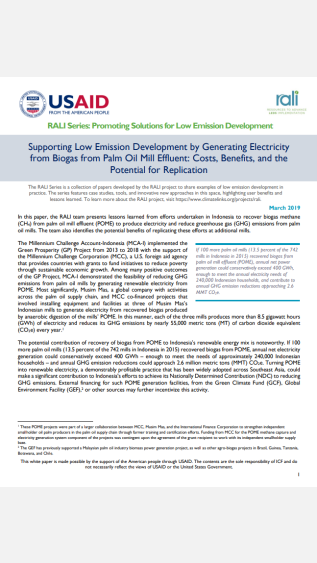
The Millennium Challenge Account-Indonesia was implemented the Green Prosperity Project from 2013 to 2018, with the support of the Millennium Challenge Corporation (MCC). The project demonstrated the feasibility of reducing GHG emissions from palm oil mills by generating renewable electricity from palm oil mill effluent. This paper presents lessons learned from these efforts and identifies the potential benefits of replicating these efforts at additional mills.
Launched in November 2017, the International Energy Agency's (IEA) Clean Energy Transitions Programme (CETP) aims to accelerate global clean energy transitions. This report outlines CETP efforts during the first year (2018), including summaries of accomplishments from the six priority countries as well as how activities were tailored for each country.
This report examines the transition risks to the economy of South Africa—and its government, municipalities, companies, and financial institutions—from a global economic transition to a low-carbon economy. The analysis in the report not only quantifies the downside risk of South Africa’s transition, but it also forecasts some of the potential benefits of a transition such as the impact of a lower global oil price that is passed through to consumers.

This paper evaluates the level of integration of climate mitigation and adaptation in cities’ local climate action plans and explores the different types of mitigation—adaptation interrelationships. It comprehensively evaluates nine adaptation and mitigation plans and presents a framework, which identifies the following sectors as avenues for synergy (or co-benefits): urban greening, urban agriculture, and water management.
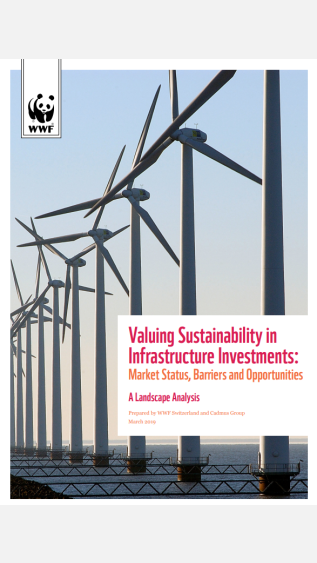
This report, which is based on 20+ interviews with investors and other stakeholders, explores the reasons for the slow progress of Environmental, Social and Governance (ESG) integration in infrastructure investments by private investors and evaluates the emerging field of publicly available tools that seek to make the sustainability impacts on and from infrastructure projects tangible for investors.
This study analyses the employment impacts of different plans for expanding electricity generation in South Africa’s power sector. It presents the resulting employment effects within the electricity sector, primarily focusing on coal and renewable energy sources.