
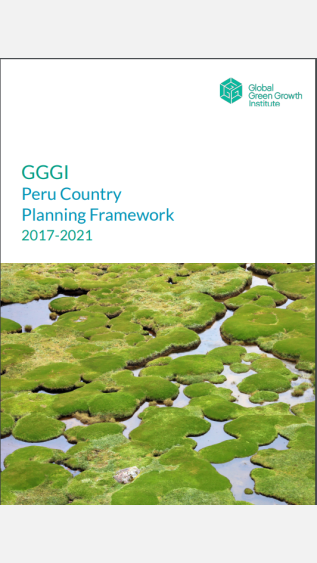
This Country Planning Framework (CPF) sets the strategic direction for the Global Green Growth Institute (GGGI) in Peru over the period 2017-2021.
This report investigates clean energy policy strategies in France, Germany, Spain, Italy, Switzerland, and the European Union (EU) as a whole and finds that none of these pathways would lead to decarbonisation to the extent required to fulfil the European (Union and national) commitments under the Paris Agreement. The report points to a greater need for power system flexibility in order to expand intermittent renewables.
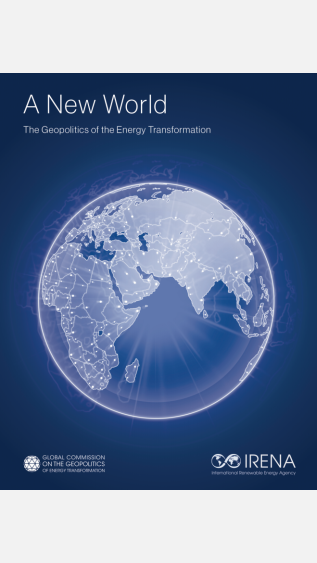
A New World: The Geopolitics of the Energy Transformation, analyzes the geopolitical implications of the global energy transformation driven by renewables. It is the culmination of ten months’ deliberations and consultations and informed by a number of background papers drafted by experts in the fields of energy, security, and geopolitics.
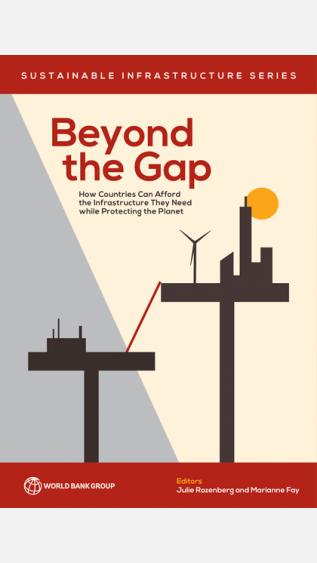
Beyond the Gap: How Countries Can Afford the Infrastructure They Need while Protecting the Planet aims to shift the debate regarding investment needs away from a simple focus on spending more and toward a focus on spending better on the right objectives, using relevant metrics. It does so by offering a careful and systematic approach to estimating the funding needs to close the service gaps in water and sanitation, transportation, electricity, irrigation, and flood protection.
This report focuses on the challenges and opportunities faced by developing countries that are related to the Paris Agreement. It reviews the experience of the Global Green Growth Institute's (GGGI's) member countries in the development of national green growth plans, NDC action plans and roadmaps, and the low-emission development strategy for a small island developing nation. It then evaluates experience related to the implementation and financing of such green growth plans in a number of high-priority areas, including the renewable energy transition, electrification of transportation, green buildings and infrastructure, and green employment.
This scoping paper explores how inclusive and green growth can be supported in fragile and conflict-affected settings (FCAS), and if there are certain approaches and instruments to support green growth, which are more or less adapted for such settings. It includes case studies on waste management in Sierra Leone, the the “Post Conflict Window” of the African Enterprise Challenge Fund (AECF), and the Deutsche Gesellschaft für Internationale Zusammenarbeit GmbH /German Corporation for International Cooperation (GIZ) & IDH Sustainable Trade Initiative: Regional Landscape Approach in Côte d’Ivoire.