
China's carbon intensity has declined by 46% compared to 2005, already exceeding 2020 target. Non-fossil energy accounted for 13.8% of primary energy consumption, afforestation and forest protection continued and the ability to adapt to climate change has been continuously enhanced. The continued improved institutional mechanisms in addressing climate change have increased the awareness of climate change in the whole society. China's Policies and Actions for Addressing Climate Change helps all interested people fully understand China's policies and actions, their performances, and effects in addressing climate change since 2017.
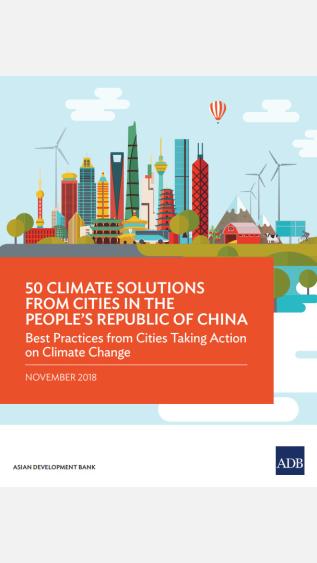
This publication showcases 50 innovative case studies from cities in the People’s Republic of China that are mitigating against and adapting to climate change. Solutions being implemented are proving that reducing carbon dioxide emissions and protecting the environment need not sacrifice economic prosperity and that they can also create valuable co-benefits in terms of positive impacts on public health and quality of life. The solutions cover a wide range of objectives, including reducing energy consumption, greening and cleaning energy supply, transforming the concept of waste, promoting green and blue spaces, and improving urban mobility.
Nordic Green to Scale 2 analyses the potential of scaling up existing climate solutions in two regions: the Baltic countries, Poland and Ukraine in Europe; and Kenya and Ethiopia in East Africa. This report reflects the study results for the five European target countries (Estonia, Latvia, Lithuania, Poland and the Ukraine). Ten different solutions have been selected out of those included in the two previous studies as particularly promising for that region. The analysis covers emission reduction potential, costs and savings as well as cobenefits of scaling up the selected solutions.

The report Mission Possible: Reaching net-zero emissions from harder-to-abate sectors by mid-century describes the technical and economic feasibility of hard-to-abate sectors to reach net-zero carbon emissions, the way to manage the transition to net-zero carbon emissions in heavy industry and heavy-duty transport and the measures policymakers, investors, businesses and consumers must follow to accelerate the change.
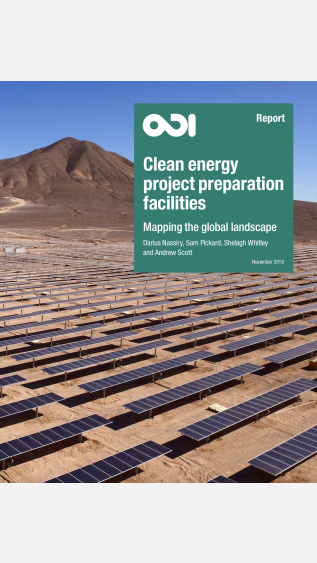
Clean Energy Project Preparation Facilities: Mapping the global landscape maps the current landscape of project preparation facilities (PPF) for renewable energy and provides recommendations for donors and governments to further develop the effectiveness of PPFs.
On 4 October 2018 (10:00 AM EST/ 4:00 PM CET) the Clean Energy Solutions Center is holding a webinar on "Greening the Grid: Best practices for grid codes for renewable energy generators".