
Bangladesh is at a critical stage in its development, being now listed as a middle-income country, and looking to reach upper-middle income status by 2021. Key to this change is the expanded growth of GDP from its stable 5-6% current growth, to a 7.5 – 8% level which is seen as being integral to the country’s continued progress. To reach the next level, Bangladesh will need to overcome a number of constraints to continue on its export-led growth path.
These are,
- insufficient supply of reliable energy,
- policies that indirectly stunt the development of economic activities unrelated to readymade garment exports, and
- insufficient security about property and land rights due in part to inadequate registry systems .
It is the first of these points that this paper is most interested in. The lack of a reliable electricity supply in Bangladesh has blighted economic development, and the impending shortage of natural gas compounds the difficulties in resolving this issue.
The El Niño event in 2015/2016 was one of the strongest since at least 1950. Drought during the event amplified disruption to public water supply in Botswana’s capital and contributed to unprecedented hydroelectric load shedding across Zambia. In Kenya, moderate precipitation during the El Niño brought localized floods to Nairobi and other areas. Yet, during the 2015/2016 El Niño, fluctuations in precipitation were not extreme considering the strength of the El Niño event. Results, therefore, highlight that even fairly moderate precipitation anomalies can contribute to major disruption to economic activity.
Energy Technology Innovation in South Asia: Implications for Gender Equality and Social Inclusion addresses how energy systems and services can improve women’s economic empowerment. It argues that integrating gender equity considerations into technology design and drawing women into this process is not only an equal employment opportunity issue, but is also crucially about how the world we live in is shaped, and for whom.
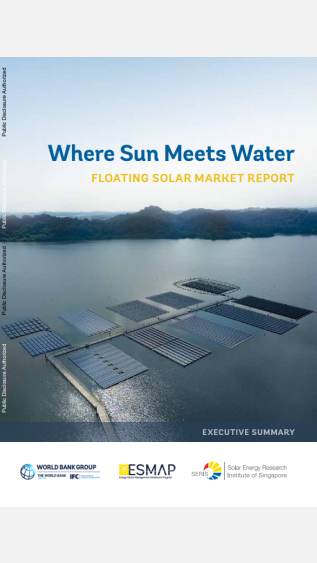
Where Sun Meets Water: Floating solar market report presents an overview of floating solar technologies, current deployment market and future opportunities, challenges related to floating solar deployment, policies and regulatory considerations, and current costs and project structuring.
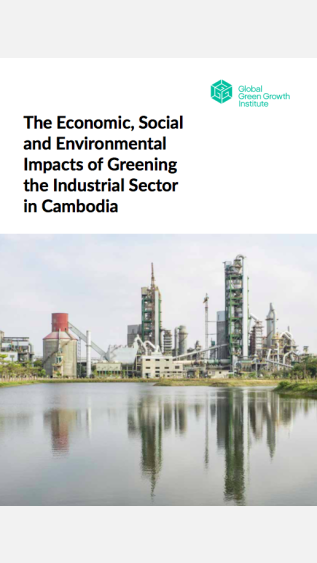
The report The Economic, Social and Environmental Impacts of Greening the Industrial Sector in Cambodia provides evidence on the economics and social benefits of greening the industrial sector of Cambodia based on a robust economic analysis that included a quantitative study and integrated modeling and scenario analysis.
This report Energy Subsidy Reform in the Republic of Moldova: Energy affordability, fiscal and environmental impacts shows the fiscal, environmental and social impacts of energy subsidy reform in Moldova with a particular focus on energy affordability.