
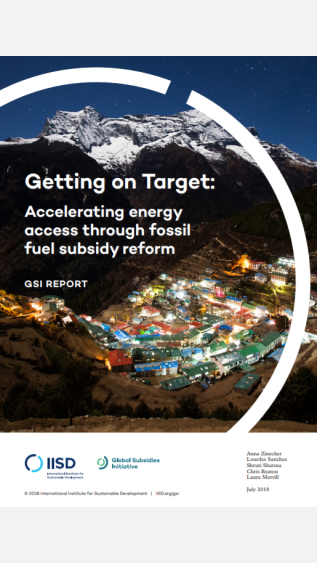
Sustainable Development Goal (SDG) 7 calls upon the global community to ensure access to affordable, reliable, sustainable and modern energy for all by 2030. Often people assume that fossil fuel subsidies help the poor by making energy more affordable. In fact, most fossil fuel subsidies are not working well for energy access and poverty goals. The annual fossil fuel subsidy expenditure of USD 425 billion could be better invested by governments towards SDG outcomes. This is already recognized by SDG 12, in which the UN General Assembly’s 193 members included the reform of inefficient fossil fuel subsidies as a means of implementation to achieve more sustainable consumption and production. Subsidy savings could be invested to get on target for many development goals—not least, those on energy access.
This paper, Getting on Target: Accelerating energy access through fossil fuel subsidy reform, reviews the financial implications of fossil fuel subsidies and takes a closer look at how reforming fossil fuel consumption subsidies could interact with energy access goals.
Key findings of this paper are:
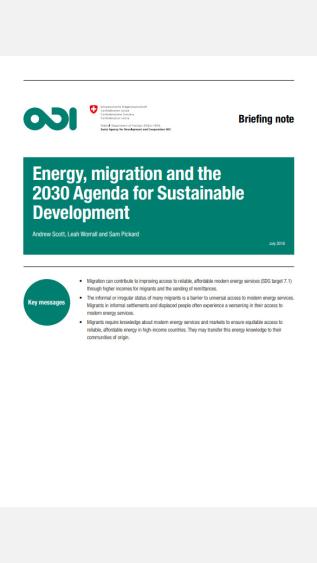
This briefing, Energy, Migration and the 2030 Agenda for Sustainable Development, considers the direct and indirect relationships between migration and energy services in places of origin and destination, and how changes due to migration will affect achievement of the Sustainable Development Goals (SDGs).

Researchers have developed a five-step methodology for central and state level government agencies looking to provide financial risk mitigation interventions to improve the credit profile of renewable energy projects in India.

On 27 June 2018 (10:00 AM CEST) the Deutsche Gesellschaft für Internationale Zusammenarbeit (GIZ) is holding a webinar on "Cost, Energy and Climate Impact Assessment of Split Air Conditioners".
"It is necessary to ensure that the economic, social and environmental implications of potential infrastructure projects are considered holistically from the earliest stages of planning and development. It is also essential for ensuring coordination between different infrastructure sectors such as transport, energy and water," says Fulai Sheng, Senior Economist at UN Environment.
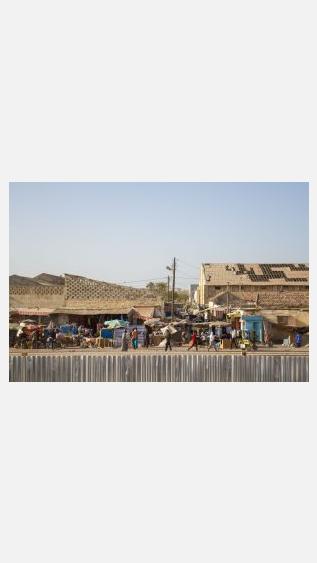
The Government of Burkina Faso, the Global Green Growth Institute (GGGI), the Green Climate Fund (GCF) and the International Renewable Energy Agency (IRENA) will co-organize a regional capacity development workshop under the theme of Financing Nationally Determined Contribution (NDC) implementation in the Energy Sector in Burkina Faso on 26-28 June 2018.