

The role of financial markets in driving the transformation towards a low-carbon climate resilient economy is fundamental to the efficient implementation of global ambitions in the post-Paris Agreement phase.

India has been a sweet spot for renewable energy investment exhibiting an 11% compound annual growth rate (CAGR) between 2004 and 2017, and ranked among the top five renewable investment destinations in the FS-UNEP Report. Some major contributing factors have been India’s strong macroeconomic fundamentals, its large and well-diversified renewable market, and India’s ability to offer higher excess returns than several comparable markets like China and the United States.
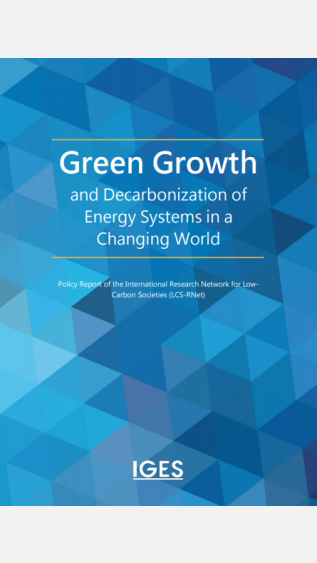
Green Growth and Decarbonization of Energy Systems in a Changing World aims to show how the transition to a low-carbon society through the decarbonization of energy systems can bring social and economic benefits and foster countries’ economic competitiveness. It notably evaluates the inter-linkages between decarbonization and Sustainable Development Goals (SDGs) and emphasizes the need for carbon pricing and climate finance. Additionally, it advocates for ambitious industrial policies to accompany energy-intensive companies in the low-carbon transition and takes example in several successful cases of decarbonization around the world.
This policy report was developed based on submissions from LCS-RNet research members, presented during the 9th Conference of the International Research Network For Low-Carbon Societies (LCS-RNet), which took place on 12 and 13 September 2017 at Warwick University, United Kingdom.
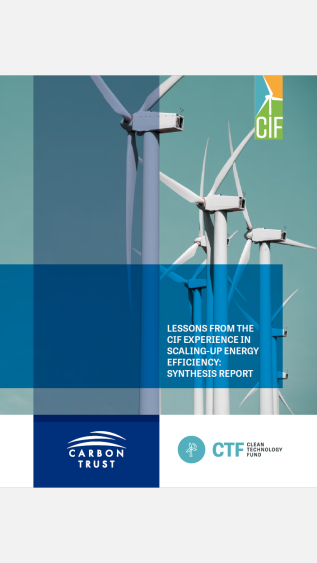
The Climate Investment Funds (CIF) Administrative Unit, in collaboration with the CIF’s multilateral development bank (MDB) partners, sought to undertake an analytical exercise to draw lessons from the experience of the CIF and international finance institutions in supporting investment in energy efficiency. The aim of this study, Lessons from the Experience in Scaling-Up Energy Efficiency: Synthesis report was to better understand the effective use of public finance – in particular, concessional climate finance provided through the CIF – in scaling up investment in energy efficiency, mainly in middle-income countries, focussing specifically on demand-side energy efficiency.
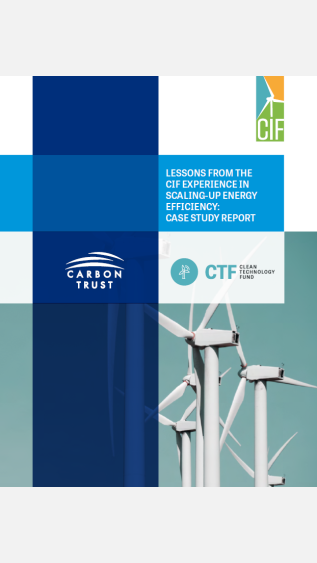
The Climate Investment Funds (CIF) Administrative Unit, in collaboration with the CIF’s multilateral development bank (MDB) partners, sought to undertake an analytical exercise to draw lessons from the experience of the CIF and international finance institutions in supporting investment in energy efficiency. The aim of this study, Lessons from the Experience in Scaling-Up Energy Efficiency: Case study report was to better understand the effective use of public finance – in particular, concessional climate finance provided through the CIF – in scaling up investment in energy efficiency, mainly in middle-income countries, focussing specifically on demand-side energy efficiency.
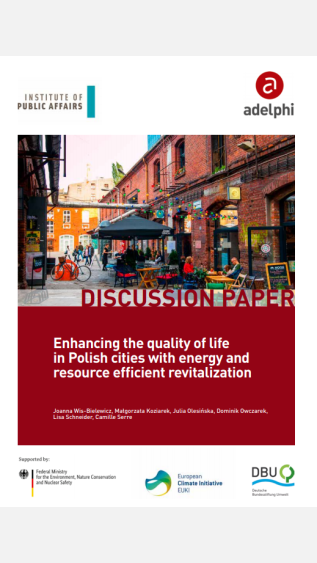
In the paper, Enhancing the quality of life in Polish cities with energy and resource efficient revitalization, authors examine the added value of resource-efficient revitalization and reshaping Polish cities into attractive, healthy and economically vital communities.