
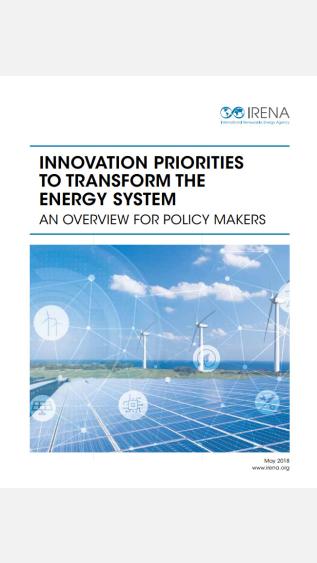
This brief, Innovation Priorities to Transform the Energy System: An overview for policy makers, provides a high-level overview of priorities to accelerate technological and systemic innovation.
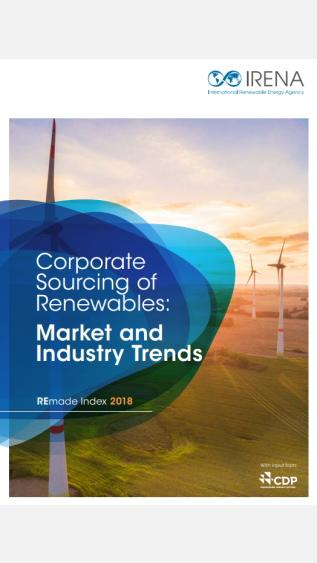
The Corporate Sourcing of Renewables: Market and industry trends report from the International Renewable Energy Agency (IRENA) highlights the latest trends and provides recommendations to more fully exploit such potential.
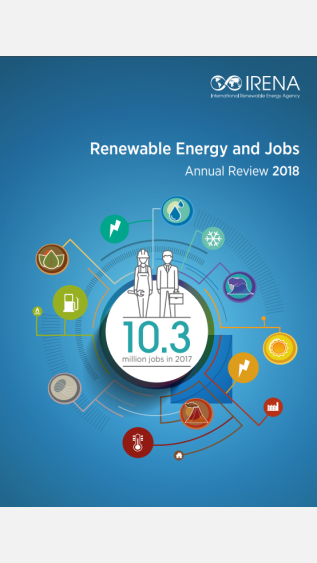
The industry created more than 500 000 new jobs globally in 2017, with the total number of people employed in renewables (including large hydropower) surpassing 10 million for the first time.
Renewable Energy and Jobs - Annual Review 2018, presents the status of employment, both by technology and in selected countries, over the past year. Jobs in the sector (including large hydropower) increased 5.3% in 2017, for a total of 10.3 million people employed worldwide, according to this fifth edition in the series.
China, Brazil, the United States, India, Germany and Japan have remained the world’s biggest renewable energy employers, representing more than 70% of such jobs. While growing numbers of countries reap socio-economic benefits from renewables, the bulk of manufacturing still takes place in relatively few countries. Four-fifths of all renewable energy jobs in 2017 were in Asia, the report finds.
Among the various technologies based on renewables, the solar photovoltaic (PV) industry supports the most jobs. PV jobs increased almost 9% to reach 3.4 million around the world in 2017, reflecting the year’s record 94 gigawatts of PV installation.
The Creating and Optimizing Employment Opportunities for Women in the Clean Energy Sector in Canada report examines the role of women in energy production.
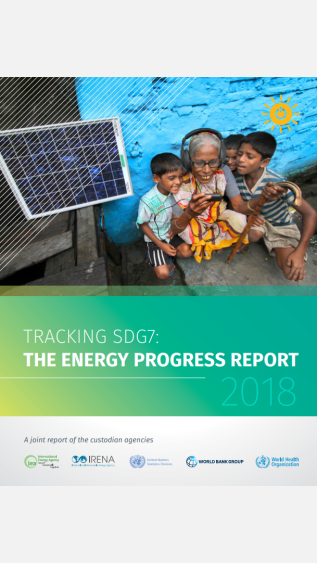
Tracking SDG7: The energy progress report provides a global dashboard on progress towards Sustainable Development Goal 7 (SDG7). The report is a joint effort of the International Energy Agency (IEA), the International Renewable Energy Agency (IRENA), United Nations Statistics Division (UNSD), the World Bank, and the World Health Organization (WHO), which the United Nations (UN) has named as global custodian agencies, responsible for collecting and reporting on country-by-country energy indicators for reporting on SDG7.
As the cost of producing electricity from solar panels and wind turbines continues to decline, every dollar invested today yields an additional 25 to 75 percent return in kilowatts, compared to five years ago. Where do Arab countries stand in view of these developments?