
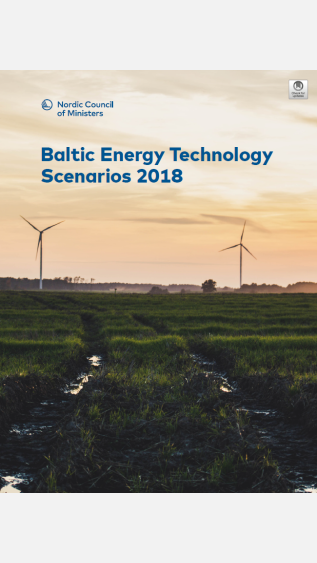
Baltic Energy Technology Scenarios 2018 (BENTE) is a scenario-based energy system analysis that explores the changes in the Baltic countries’ energy systems. What are the drivers and their impacts in the following decades? What would be required for the Baltic countries to meet their climate and energy targets in 2030, and what development would lead the Baltics towards a 2°C pathway?
The report finds that the Baltic countries’ proposed renewable energy (RE) targets can be achieved using domestic resources. More renewable energy (electricity, heat and fuels) lets energy demanding sectors reduce GHG emissions and increase the RE share. However, the Baltic countries still do not reach their Effort Sharing Sector’s 2030 targets in the 4°C Scenario (4DS). Without policies to stimulate local renewable energy generation, the Baltics are likely to become large net importers of electricity.
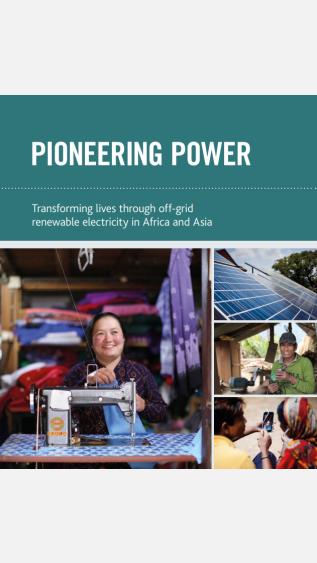
This report, Pioneering Power: Transforming lives through off-grid renewable energy in Africa and Asia, examines the challenge of bringing power to over one billion people who live without electricity, mostly in remote, rural areas in sub-Saharan Africa and South Asia.
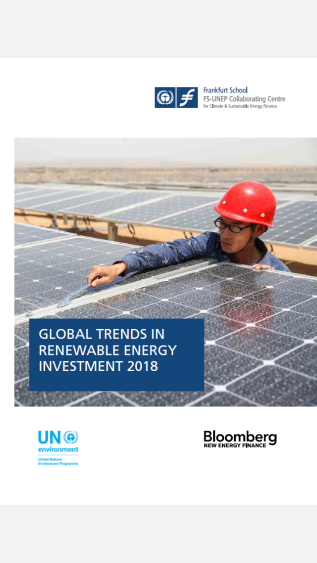
The report Global Trends in Renewable Energy Investment 2018 finds that falling costs for solar electricity, and to some extent wind power, is continuing to drive deployment.
Spurred by innovation, increased competition, and policy support in a growing number of countries, renewable energy technologies have achieved massive technological advances and sharp cost reductions. Renewables have come to the forefront of the global energy transition, with nearly every country adopting a renewable energy target. Yet progress has been uneven in different countries and sectors. Technology and financial risks still hamper the expansion of renewables into new markets. As the power sector develops further, the increased adoption of variable renewables like solar and wind requires more flexible systems. Compared to power generation, the regulatory framework for end-use sectors lags behind.
The production of Renewable Natural Gas (RNG) from organic waste for use as a vehicle fuel is an emerging strategy that businesses, states, and municipalities in the United States are pursuing to make use of waste-derived methane and lower the carbon footprint of vehicle fleets.
The Production and Use of Renewable Natural Gas as a Climate Strategy in the United States explores RNG’s potential as a climate-change strategy in the U.S., including the conditions under which it can achieve large greenhouse gas (GHG) emissions reductions compared to fossil fuels used to power vehicles.