

Wood residues form Finland’s main source of bioenergy. About half of the country’s wood production is used for heat and power, either through district heating systems or through combined heat and power (CHP) plants.
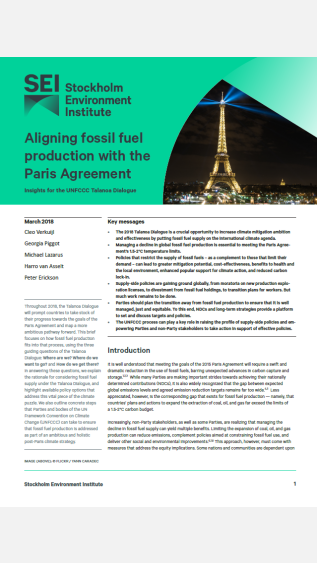
This brief Aligning fossil fuel production with the Paris Agreement focuses on how fossil fuel production fits into that process, using the three guiding questions of the Talanoa Dialogue: Where are we?Where do we want to go? and How do we get there?
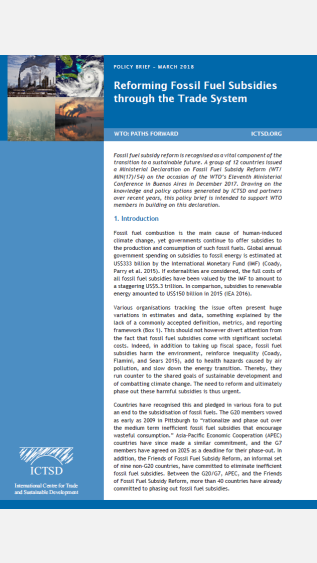
Fossil fuel subsidy reform is recognised as a vital component of the transition to a sustainable future. A group of 12 countries issued a Ministerial Declaration on Fossil Fuel Subsidy Reform (WT/MIN(17)/54) on the occasion of the WTO’s Eleventh Ministerial Conference in Buenos Aires in December 2017. Drawing on the knowledge and policy options generated by ICTSD and partners over recent years, this policy brief Reforming Fossil Fuel Subsidies through the Trade System is intended to support WTO members in building on this declaration.
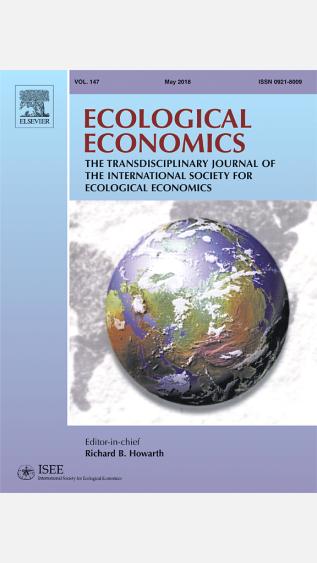
The role of technology transfer in the mitigation of climate change has been strongly emphasized in the recent policy debate. This paper Technology Diffusion and Climate Policy: A Network Approach and its Application to Wind Energy offers a network-based perspective on the issue.
This report Leveraging the Smart Grid: The Effect of Real-Time Information on Consumer Decisions reviews the literature on the impact of real-time information provision on consumer decision-making. In addition, it describes the results of a study in which about 7000 households in Ontario, Canada were provided with in-home displays linked to smart meters that provided real-time feedback on electricity consumption. The results show that electricity consumption declines by about 3% as a result of information feedback, that the reduction in demand is sustained for at least five months, and that it is highly correlated with outdoor temperature.

The Paris Agreement and the 2030 Agenda for Sustainable Development have generated a fast-growing interest in strengthening the links between climate change and other development priorities in Asia. Due to this growing interest, policymakers are increasingly looking for tools and methods that can analyse linkages between climate change and development priorities.