
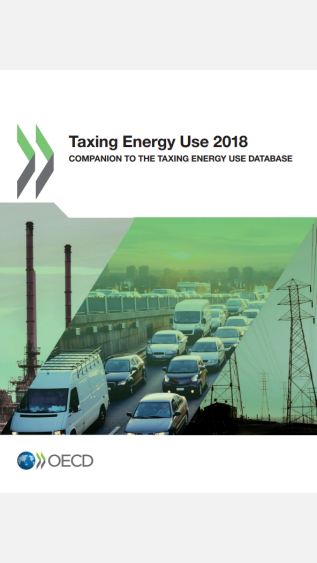
The report Taxing Energy Use 2018: Companion to the Taxing Energy Use Database assesses the magnitude and coverage of taxes on energy use in 2015, across different countries and selected country groups, six sectors and five main fuel groups.
On 31 January 2018 (14:00 CET), the Regulators Assistance Project (RAP) is holding a webinar on "Designing Retail Electricity Tariffs for a Successful Energy Union".

In Scandinavia, behavioural economics is increasingly applied in the context of green energy economy policy analysis. What can it tell us?
On 18 January 2018 (2:00 PM CET), WISIONS is holding a webinar on "Stronger Together: Why Networks of Energy Access Practitioners Matter".
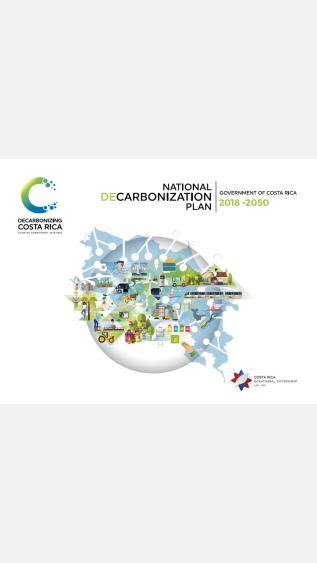
The Government of Costa Rica has become the 14th country to submit its long-term strategy for low-emission development (LTS) to the UNFCCC Secretariat. The LTS conveys Costa Rica’s aspiration to be a modern, green, and emissions-free economy and commits the country to net-zero emissions by 2050. Costa Rica’s ‘National Decarbonization Plan 2018-2050’ lays out the process for achieving these objectives, and explains that while the country has natural capital, education, and openness, its transition to net-zero emissions could be slowed by shortcomings in infrastructure, including in the transport sector, and fiscal constraints.
The Fiji Low Emission Development Strategy (LEDS) 2018-2050 is a living document compiled in 2018 to define pathways to achieve low emission development in Fiji until 2050.