
This report presents the results of the implementation of the Global Bioenergy Partnership (GBEP) indicators in Viet Nam. The overall objective of the project was to strengthen the capacity of Viet Nam and Paraguay to monitor the environmental, social and economic impacts of their bioenergy sector, through the implementation of the GBEP Sustainability Indicators for Bioenergy and related technical support.
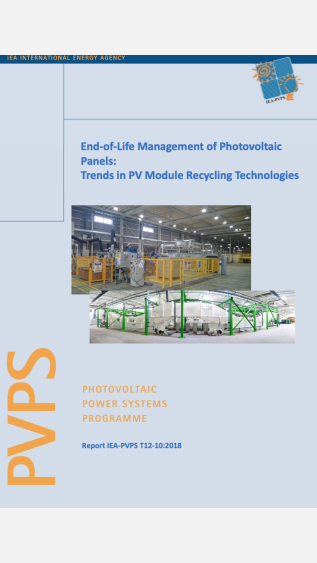
This report provides an international survey of trends related to the development of Photovoltaic (PV) module recycling technology from the perspective of both the private and public sectors.
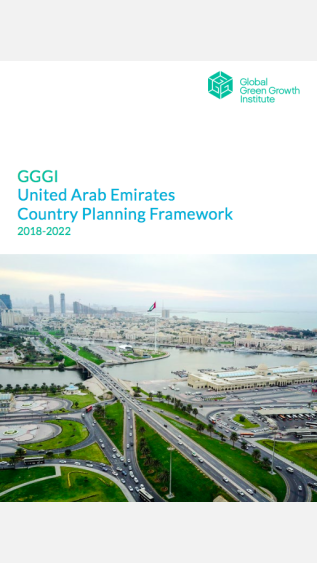
This Country Planning Framework (CPF) sets the strategic direction for the Global Green Growth Institute (GGGI) in the United Arab Emirates (UAE) over the period 2018-2022.
Issued to address the growing concerns about the predominance of imported fossil fuels in the country's energy sector, and increase the efficiency and sustainability of energy supply and demand the document National Sustainable Energy Policy was prepared as the part of the Sustainable Energy Framework of Barbados and is now being subjected to thorough review and update.
By 2050, about 70% of the world’s population will live, commute and work in urban areas. Between now and then, cities and suburbs will undergo significant transformations to create sustainable living conditions for their residents. Mobility and energy are the twin pillars of these transformations, and both will require radical adaptation to meet demographic and economic growth without increasing congestion and pollution. Cities will require mobility and energy solutions that are sustainable, affordable, secure and inclusive, and integrated with customer-centric infrastructure and services. Thus, the convergence of energy and mobility is critical.
These are exciting times in which new technologies allow people to rethink the way they live in a more sustainable and efficient manner. Smart mobility. Smart water. Smart grid. Smart integration. These are the foundations of tomorrow’s cities, which are being realized today.
The landscape of renewable energy finance has evolved rapidly. Since 2012, renewable power capacity installations have exceeded non-renewables by a rising margin, representing about 60% of all new power-generating capacity added worldwide in 2016. Investment reached a comparable milestone in 2015, when renewable power technologies for the first time attracted more finance than non-renewable power technologies, a trend that has continued subsequently.
Global Landscape of Renewable Energy Finance analyses the renewable energy finance landscape. It outlines key trends globally in 2013-2016, regionally and by technology, examines the differing roles and approaches of private and public finance, highlights the important role of risk mitigation instruments, and provides an outlook for renewable energy finance in 2018 and beyond.