
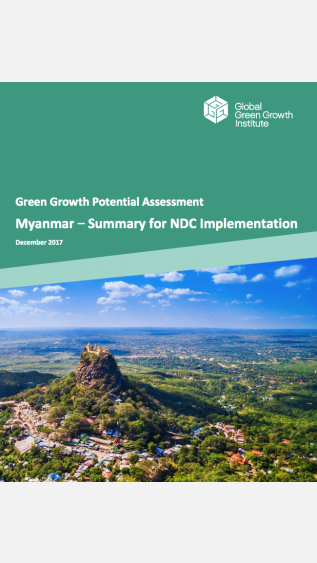
An assessment was conducted by the Global Green Growth Institute (GGGI) to identify Myanmar's specific opportunities and barriers in relation to green growth in six sectors. This summary report provides an overview of recommendations relevant for its Nationally Determined Contribution (NDC) implementation, focusing on related recommendations for agriculture, forestry and land use, energy, and education and governance.
Utilising the United Republic of Tanzania as a case study, this article examines how climate change is addressed in policy, how it is being mainstreamed into water, energy and agriculture sector policies and the extent to which cross-sectoral linkages enable coordinated action.
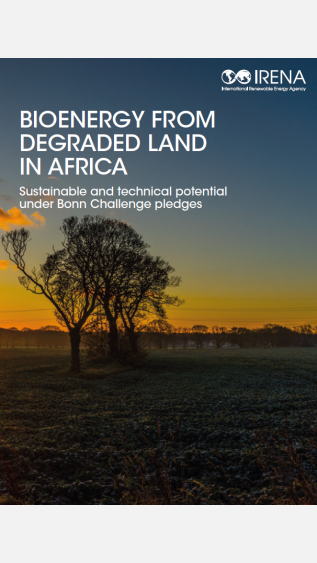
Restoration of degraded land can create vast bioenergy crop potential, without constraining food crops or other land use options. This presents an important opportunity for African countries to develop modern, sustainable bioenergy from rapidly growing wood crops at the same time as pursuing ambitious forest landscape restoration initiatives.
Bioenergy from Degraded Land in Africa: Sustainable and technical potential under Bonn Challenge pledges presents a methodology to estimate the sustainable energy potential from land restoration in line with the Bonn Challenge, particularly as it relates to African countries. (The Bonn Challenge is a global effort to bring 150 million hectares of the world’s deforested and degraded land into restoration by 2020, and 350 million hectares by 2030.)
The African Forest Landscape Restoration initiative, AFR100, has set out to collect pledges to restore 100 million hectares of degraded land, mostly in in sub-Saharan Africa. To date, 18 countries have pledged to restore 75 million hectares.
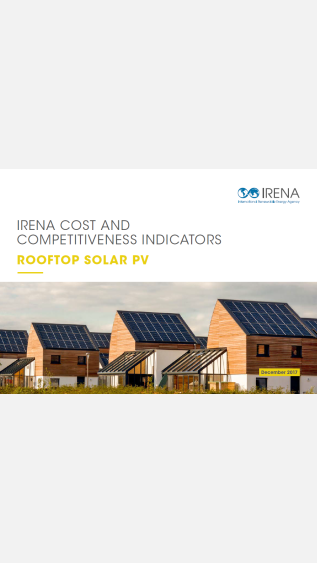
Solar photovoltaic (PV) power generation has grown rapidly, from less than 1 gigawatt (GW) in 2000 to about 300 GW worldwide in 2017. Solar PV’s competitiveness against other sources of electricity has also continued evolving.
To track these crucial market trends, the International Renewable Energy Agency (IRENA) has developed Cost and Competitiveness Indicators for rooftop solar PV, based on the trends witnessed in key electricity markets.
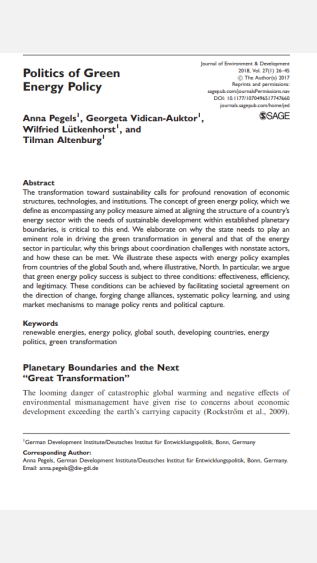
Politics of Green Energy Policy examines the role of the state in driving the green transformation in the energy sector. It includes an overview of green energy policy measures that can reshape current incentive systems to support the green transformation, key conditions for policy success, and how to overcome coordination challenges with nonstate actors. It also includes real-world examples of how policymakers are coping with green energy policy and coordination challenges, particularly in the global South.
The statistical report Energy Efficiency Indicators Highlights 2017 is designed to help understand what drives final energy use in IEA member countries in order to improve and track national energy efficiency policies.