

"Stranded (carbon) assets are highly relevant to discussions on sustainable infrastructure. Any investment in infrastructure that does not consider future developments such as decarbonization will risk becoming stranded and hence a liability to investors," says Alexander Pfeiffer, PhD candidate at the School of Geography and the Environment at the University of Oxford.
This report provides options for standardisation examined by the ISO 14097 working group. It is based on a review of more than 130 financial institutions’ actions and initiatives on the integration of climate-related issues and current standards and disclosure frameworks aiming at improving financial institutions' practices and its comparability.
This report Mexico’s efforts to phase out and rationalise its fossilfuel subsidies provides a succinct account of the discussions that took place between Mexican officials and the review team, but also within the review team itself. After summarising the key aspects of Mexico’s energy landscape, the report discusses the ongoing reforms of transport fuel pricing.
This report Germany’s effort to phase out and rationalise its fossil-fuel subsidies demonstrates that throughout the last two decades, Germany’s energy policy has shifted gears in two major ways.
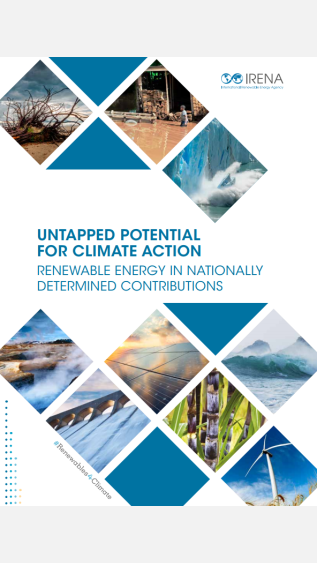
Nationally Determined Contributions (NDCs) are a cornerstone of the Paris Agreement on climate change. They set out the actions that countries plan to undertake to achieve the agreement’s objectives, focused on limiting the rise in average global temperatures to well below 2°C, ideally to 1.5 °C.
Renewable energy features prominently in most of these NDCs, confirming that the transition to a renewable energy future has come to be recognised globally as central to addressing climate change. Governments are well underway with implementing the first set of NDCs and will begin to review them in 2018. This entails taking stock of the adequacy of those NDCs to meet the objectives set out in the historic 2015 climate agreement. NDCs will be revised or updated by 2020, and every five years thereafter – with each revision aimed at being more ambitious than the previous one.
The UN Environment Emissions Gap Report 2017 presents an assessment of current national mitigation efforts and the ambitions countries have presented in their Nationally Determined Contributions, which form the foundation of the Paris Agreement.