

The brochure Past Successes and Future Opportunities covers examples of UNDP’s work in protecting the global ozone layer, advancing sustainable cooling solutions for and tackling climate change, and highlighting linkages to the Sustainable Development Goals.
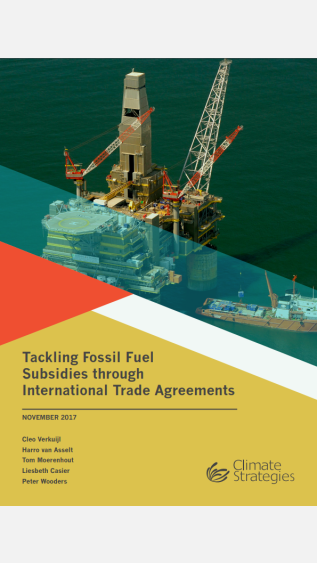
The report Tackling Fossil Fuel Subsidies through International Trade Agreements analyses the compatibility of five selected fossil fuel support measures in the Group of 20 (G20) countries with the WTO’s 1994 Agreement on Subsidies and Countervailing Measures (ASCM). The exercise has never been attempted before, and doing so, it identifies some of the key legal questions and challenges faced at the WTO.
Specifically, the findings highlight the difficulty of litigating fossil fuel consumption subsidies, measures that remain substantial. While enhanced transparency could help address some of the challenges complainants may face, fossil fuel subsidy notification rates within the WTO system remain disappointingly low.
In light of these shortcomings, the paper identifies five complementary avenues for reform of international trade policy to enable countries to better address fossil fuel subsidies:
The role of technology transfer in the mitigation of climate change has been strongly emphasized in the recent policy debate. This paper, Technology Diffusion and Climate Policy: A Network Approach and its Application to Wind Energy, offers a network-based perspective on the issue.
The report Impacts of Pollution on Our Health and the Planet: The Case of Coal Power Plants focuses on the health and economic impacts of air pollution from the production of electricity from fossil fuels, particularly coal.
The paper Tackling Pollution is Essential for Meeting SDG Poverty Objectives identifies the links between poverty and the risks from different types of pollution, with examples from around the world, and examines how these risks pose a threat to the achievement of the SDGs.
Some 25 years have elapsed since international financial institutions espoused a package of power sector reform measures that became known as the Washington Consensus. This package encompassed the establishment of autonomous regulatory entities, the vertical and horizontal unbundling of integrated national monopoly utilities, private sector participation in generation and distribution, and eventually the introduction of competition into power generation and even retail services. Exploiting a unique new data set on the timing and scope of power sector reforms adopted by 88 countries across the developing world over 25 years, this paper seeks to improve understanding of the uptake, diffusion, packaging, and sequencing of power sector reforms, and the extent to which they were affected by the economic and political characteristics of the countries concerned. The analysis focuses on describing the patterns of reform without judging their desirability or evaluating their impact. The paper finds that following rapid diffusion during 1995–2005, the spread of power sector reforms slowed significantly in 2005–15.