

Climate and greenhouse gas (GHG) scenarios have typically paid scant attention to the metal implications necessary to realize a low/zero carbon future.
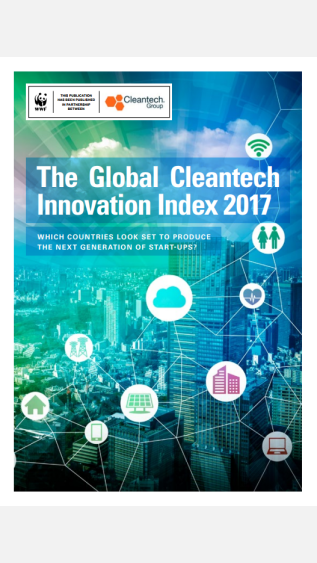
The Global Cleantech Innovation Index (GCII) programme investigates where, relative to GDP, entrepreneurial clean technology companies are most likely to emerge from over the next 10 years – and why. Drawing on a wide range of factors and sources, the study "The Global Cleantech Innovation Index 2017: Which countries look set to produce the next generation of start-ups?" seeks to answer the same question as the 2012 and 2014 GCII reports, namely: which countries currently have the greatest potential to produce entrepreneurial cleantech start-up companies that will commercialize clean technology innovations over the next 10 years? Based on the data contributing to 15 indicators of creation, commercialisation and growth of cleantech start-ups in 40 countries, the study identifies different key trends and shows which countries are falling ahead and below the curve for cleantech innovation.
This report Thailand’s Community-Based Eco-Industrial Town Development found some potential lessons learned from Thailand’s Eco Industrial Town program and opportunities for improvement.
The case study China’s Green Special Economic Zone Policies — Development and Implementation looks at a series of programs that the Chinese government implemented to stimulate green transition of industries and the entire economic value chain.

The case study Greening Industrial Parks — A Case Study on South Korea’s Eco-Industrial Park Program presents the National Eco-Industrial Park (EIP) program, which was launched by the Korean National Cleaner Production Center (KNCPC) in 2003.

The case study Solar-Powered Irrigation Pumps in India — Capital Subsidy Policies and the Water-Energy Efficiency Nexus looks at India’s National Solar Mission program, under which the central and state governments support farmers not only by providing a capital cost subsidy on solar pump systems, but also by creating an enabling framework on their deployment by actively engaging key stakeholders.