
The case study Enabling Adoption of Electric Mobility in Public Transportation in India describes how GGGI has supported the State Government of Himachal Pradesh in developing and implementing its Green Growth Strategy and established a business case for introduction of electric vehicles.

International Climate Policy (ICP) is a bi-monthly magazine published by the International Center for Climate Governance (ICCG), covering trends around international and domestic climate and energy policies, as well as carbon markets.

A global survey of 50 companies found that 40% of hydropower operators see evidence of climate change already influencing their engineering and design measure to a large extent. Yet most hydropower facility investors and operators do not consider future climate conditions, nor do energy planners adequately assess climate change risks in power planning.
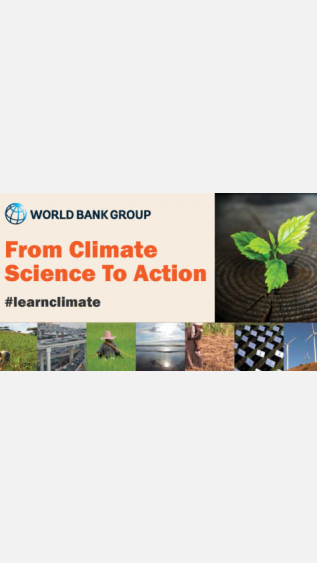
Each part of the world faces specific vulnerabilities to climate change and has different opportunities to mitigate the effects and build resilience in the 21st century. With the ratification of the Paris Agreement, many countries have acceded to act in combatting climate change.
The objective of the present assessment is to determine to what extent the Rubaya green village demonstration project has been successful in raising the well-being of the beneficiaries while, at the same time, ensuring the sustainable use of natural resources and social cohesion. The project efficiency was determined to be high, leading to benefits surpassing the costs by 15% to 35%. The potential net benefits to Rwanda, the report found, justify the replication of the Rubaya green village demonstration project and to make the case for the Government and development partners to invest in the widespread replication of the project.
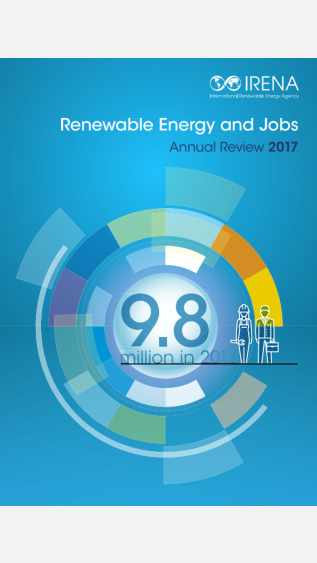
Renewable Energy and Jobs – Annual Review 2017 presents the status of renewable energy employment, both by technology and in selected countries, over the past year. In this fourth edition, the International Renewable Energy Agency (IRENA) finds that renewable energy employed 9.8 million people around the world in 2016 – a 1.1% increase over 2015.
Jobs in renewables excluding large hydropower increased by 2.8%, to reach 8.3 million in 2016. China, Brazil, the United States, India, Japan and Germany accounted for most of the renewable energy jobs. The shift to Asia continued, with 62% of the global total located in the continent.
Solar photovoltaic (PV) power was the largest employer, with 3.1 million jobs, up 12% from 2015. The growth came mainly from China, the United States and India, whereas jobs decreased for the first time in Japan, and continued to decline in the European Union. New wind power installations in the United States, Germany, India and Brazil, meanwhile, contributed to the increase in global wind employment by 7%, to reach 1.2 million jobs.