
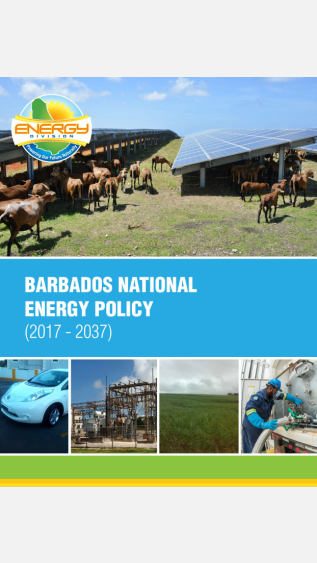
This Barbados National Energy Policy (BNEP) 2017-2037 Document is designed to ensure “Energy security and affordability through diversity and collaboration: Establishing and maintaining a sustainable energy sector for Barbados.”
Fiji’s current Nationally Determined Contribution (NDC) is specific to the energy sector both in terms of a GHG (greenhouse gas) baseline, with 2013 as the reference year, and in terms of potential mitigation actions.
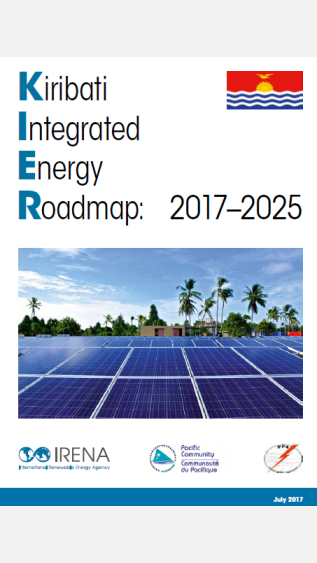
Kiribati Integrated Energy Roadmap: 2017-2025 (KIER) comprises a policy framework with specific targets and a set of priority actions, with associated cost estimates and specific timelines.
Investment in Tanzania’s energy sector is growing, but how much attention is being given to decentralised energy solutions for people who still lack energy for their basic needs: to light their homes and power their farms and businesses?
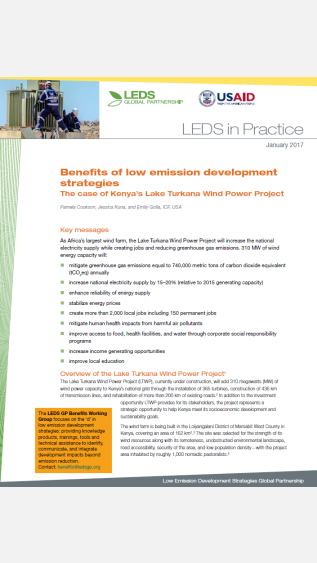
Countries pursuing low-emission development strategies (LEDS) aim to grow their economy while reducing greenhouse gas emissions, increasing resilience to climate change impacts, and achieving social development and environmental goals.
Ambitious national commitments, international agreements, and rapid technological progress have prompted countries around the world to turn increasingly renewable energy to expand their power infrastructure. However, the variability of solar and wind energy – two key sources for renewable power generation – presents new challenges.
Proactive energy planners will address the challenges of variable renewable energy (VRE) integration directly, starting with long-term investment choices. Techno-economic assessments can help to inform policy development and set optimal targets for renewable power uptake. Scenario modelling, meanwhile, has become a critical planning tool for the power sector, with considerable knowledge being acquired in certain markets on how to represent VRE in long-term models.
This report highlights the findings from AVRIL (“Addressing Variable Renewable Energy in Long-term Energy Planning”), a project by the International Renewable Energy Agency (IRENA) that has identified the best practices in long-term planning and modelling to represent high shares of VRE.