
Biofuels have received global attention recently as governments across the world seek to address fuel efficiency, air quality and energy security. Biofuels are produced from renewable biological sources and are considered viable alternatives or supplements to fossil fuels. In order to support a broader shift towards biofuels, governments have introduced various policy measures; some of these include mandatory fuel blending programs, incentives for flex-fuel vehicles and agricultural subsidies for farmers. The Government of India in January 2003 launched its Ethanol Blended Petrol (EBP) Programme for 5% ethanol blended petrol. India’s EBP Programme sought to improve fuel efficiency and ensure protection from the price shocks of the global crude market. In 2009, the Government of India introduced a National Policy on Biofuels. The Policy focussed on further encouraging biofuel usage and reducing the prevailing dependence on fossil fuels, while it sought to mitigate environmental and fuel efficiency concerns. The Policy also recognised the significant opportunity that biofuels offer to India’s agricultural and industrial sectors.
The purpose of this paper is to explore the potential role of the Environmental Goods Agreement (EGA) under the auspices of the World Trade Organization (WTO) in supporting the objectives of the Paris Agreement and the sustainable development goals of 2015, paying particular attention to potential benefits for developing countries. It analyses whether and how joining the EGA could bring benefits to developing countries that might be able to access clean energy technologies at a lower cost.
The Jordan Clean Energy Investment Policy Review is a country-specific application of the OECD Policy Guidance for Investment in Clean Energy Infrastructure. It aims to help Jordanian policy makers strengthen the enabling conditions for investment in renewable electricity generation in Jordan.
Scaling up investment in renewable power can significantly contribute to addressing many of Jordan’s crucial challenges. These include: sustaining economic growth; improving energy security and reducing fossil-fuel consumption and imports; and reducing fiscal pressure linked to costly support to fossil-fuel imports. Unlike some of its neighbours in the Middle East and North Africa (MENA) region, Jordan has few fossil fuel resources of its own and imports around 96% of its total primary energy supply. Concerns over energy security and fossil-fuel imports dependency have intensified in Jordan due to political events in the region, including gas supply interruptions since 2011, and more recently, the rapid growth in energy demand caused by a large influx of more than one million refugees and asylum seekers, mostly from Syria and Iraq.
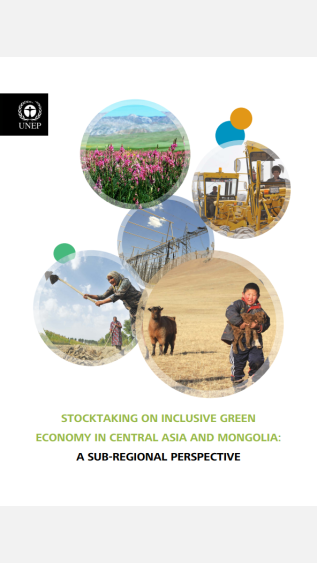
Stocktaking on Inclusive Green Economy in Central Asia and Mongolia: A Sub-Regional Perspective was produced as part of the United Nations Environment Programme (UNEP) project “South-South Cooperation in Mongolia and Central Asian Countries: Sharing Knowledge on Inclusive Green Economies”. The project aimed to support Mongolia and Central Asian countries in developing their research capacity in the area of Green Economy and Ecological Civilisation and to share this knowledge with decision-makers and technical experts through knowledge exchange between China, Central Asian countries, and Mongolia.
International Climate Policy (ICP) is a bi-monthly magazine published by the International Center for Climate Governance (ICCG), covering trends around international and domestic climate and energy policies, as well as carbon markets.