
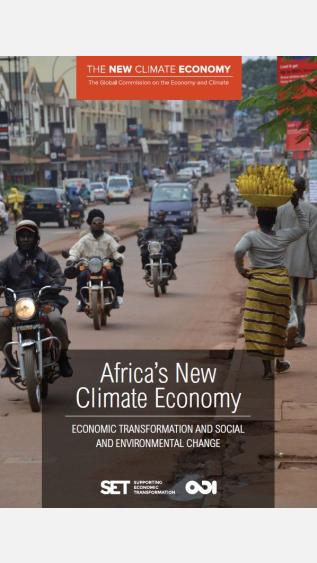
Africa stands at the threshold of a tremendous opportunity: its economies are seeking to shift to higher productivity sectors which can boost prosperity and drive developmental goals. At the same time, the right kind of economic transformation can also ensure that Africa’s growth is sustainable and resilient in the face of the increasing impacts of climate change.
This report offers key insights for policy makers seeking to deliver better growth and a better climate in African countries. It aims to help decision-makers take stock of the region’s recent experiences and draw lessons for the future. In particular, it seeks to crystallise ideas on how to harness the forces of economic, social and environmental change to accelerate inclusive and sustainable development across the region.
For Africa to achieve this better growth, the report identifies five action areas for governments to consider as they formulate development strategies and action plans for the future. These are:
This is the first comprehensive report on Botswana’s energy accounts project. It presents the methodology, data compilation process, results, and policy messages. The prime focus of the report is on the Physical Energy Flow Accounts. The accounts cover two energy products—coal and electricity—in physical energy units during the reference period 2010/11 to 2014/15.
Despite its Least Developed Country status, Ethiopia has played a leading role in climate diplomacy. This briefing explores the factors behind Ethiopia’s success in order to draw lessons for other nations.
The United Nations 2030 Agenda for Sustainable Development, adopted in September 2015, includes Sustainable Development Goals with respect to climate change (SDG 13) and to ensuring access to sustainable energy (SDG 7). Questions of mitigation and adaptation to climate change are furthermore integrated throughout the Agenda. This think piece explores how trade rules, in particular, those established at the multilateral level, could support progress towards the 2030 Agenda’s objectives related to climate change and clean energy.
The authors focus on six key policy challenges at the intersection of trade policy and climate change and clean energy. They recommend prioritising policy actions in three areas: fossil fuel subsidies; clean energy subsidies; and access, dissemination, and transfer of climate-friendly technologies. The authors also suggest policy actions to tackle three other important issues: dealing with the political economy of local content requirements; pricing carbon nationally while tackling international competitiveness and carbon leakage concerns, and designing “carrots” and “sticks” for more ambitious action under climate clubs.
Carbon markets are expected to continue to play a key role in the mitigation effort under the Paris Climate Agreement. Cooperation in carbon market clubs can help reduce competitiveness and carbon leakage concerns, which has the potential to incentivise the uptake of more and increasingly ambitious carbon markets. This policy brief assesses the potential for carbon market clubs in light of the Paris Agreement and recently launched carbon market initiatives from a climate and trade policy perspective. It shows that additional efforts will be needed within and outside the UNFCCC for carbon market clubs to emerge and explores the challenges and opportunities the trade system may pose in this regard.
The study presents an in-depth analysis of carbon markets in the USA and presents a model to offer comprehensive inquiry. The model takes inputs – including policy interventions and certain assumptions like population trends, GDP growth and energy prices – and generates outputs related to investment required, policy-induced avoided costs and added benefits in areas like employment and performance against secondary targets related to energy consumption and emissions. It also includes several variables across sectors and thematic domains.
In addition to summarizing these data in a user-friendly presentation, the study includes original research insights revealing tangible policy, investment and business trends. This study provides the most comprehensive overview to date for market actors to better "connect the dots" between INDCs and their impacts on investment portfolios, business operations, and national policy making.