
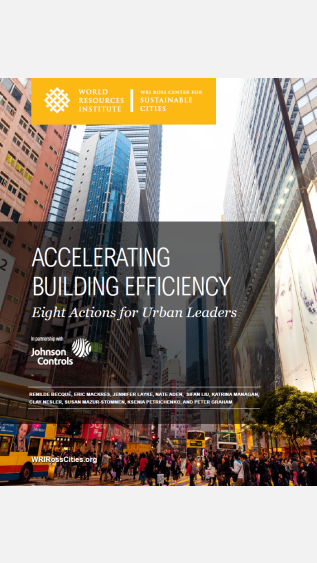
Efficient buildings—those that make highly productive use of natural resources—are vital to achieving sustainable development: They align economic, social, and environmental opportunities, creating so-called “triple bottom line” benefits.
The Accelerating Building Efficiency: Eight Actions for Urban Leaders provides local governments and other urban leaders in cities around the world with the background, guidance, and tools to accelerate building efficiency action in their communities. The report focuses on eight categories of policies and actions that can help decision-makers plan for transformative change in their cities: Building Efficiency Codes and Standards; Efficiency Improvement Targets; Performance Information and Certifications; Incentives and Finance; Government Leadership by Example; Engaging Building Owners, Managers, and Occupants; Engaging Technical and Financial Service Providers, and Working With Utilities.

Cities globally consume up to 80% of the total global energy production and release about 75% of global CO2 emissions.
The overall aim of the Large Industry Energy Network (LIEN) is to support companies to build up or to further improve an energy management system and to achieve ISO 50001 certification.
Nordsyn surveillance cooperation for green products intends to improve the efficiency of market surveillance of Ecodesign and energy labelling.
The goal of Sustainable Public Procurement (SPP) of Nether land is to ensure that public procurers, despite working under tight budget constraints, consider the lifecycle costs and not only the purchase price of products and services. No quantitative targets were set.
Slovak Energy Efficiency and Renewable Energy Finance Facility (SlovSEFF) intends to channel financing to sustainable energy projects reducing GHG emissions.