
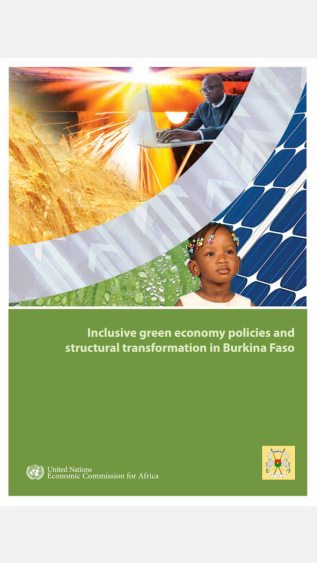
In Burkina Faso, more effective macroeconomic management based on policies to promote sustained and sustainable growth remains a priority goal. However, it is now recognized that maintaining rapid growth is not synonymous with structural transformation or a rapid reduction in poverty. To achieve the above-mentioned goals, growth must be deliberately oriented towards sustainable, inclusive development, predicated in particular on a process of agricultural modernization, industrialization tailored to national circumstances and economic diversification which creates jobs, helps to lower poverty levels and gives wider access to basic services. Accordingly, an inclusive green economy, designed in a spirit of structural transformation, is increasingly recommending itself in policy and strategy debates as the most suitable way of bringing about sustainable economic and social transformation.
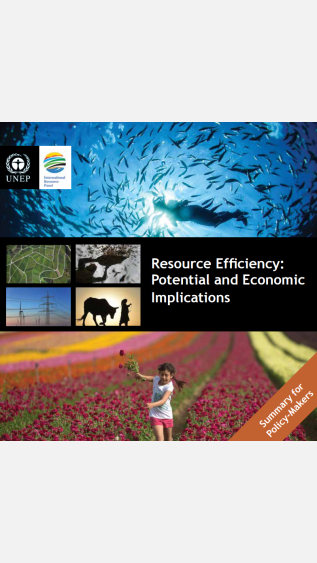
This report Resource Efficiency: Potential and Economic Implications has been produced by the UNEP’s International Resource Panel in response to a request by leaders of the G7 nations in the context of efforts to promote resource efficiency as a core element of sustainable development.
This paper analyses the role of behavioural factors for the energy management of micro and small enterprises (MSEs) in Sub-Sahara Africa for the first time. Drawing on semi-structured interviews and focus group discussions in Uganda, it finds that behavioural barriers impeding energy efficiency contribute to the limited performance of MSEs in Uganda. Limited self-control and short-term thinking, habits, a status quo bias and a lack of trust impede the uptake of energy efficiency, while first-hand experience with efficient technology, implementation intentions and social learning can be conducive. Behavioural insights on energy efficiency therefore present another piece of the puzzle on MSE performance.
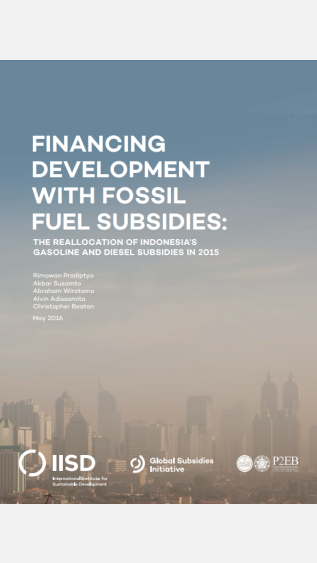
At the very end of December 2014, Indonesia introduced major reforms to its fossil fuel subsidies: removing subsidies to gasoline, except for distribution costs outside of the central islands of Java, Bali and Madura and introducing a “fixed” subsidy of IDR 1,000 per litre for diesel. At the same time, world oil prices plummeted. Together, these changes led to massive fiscal savings, equal to IDR 211 trillion (US$ 15.6 billion): over 10 per cent of state expenditure. This study investigates two central questions: Where were these savings reallocated? And is the new expenditure doing a better job for Indonesia’s development than subsidies? It concludes that fuel subsidy reform and reallocation in Indonesia have been a major step forward in improving public expenditure.
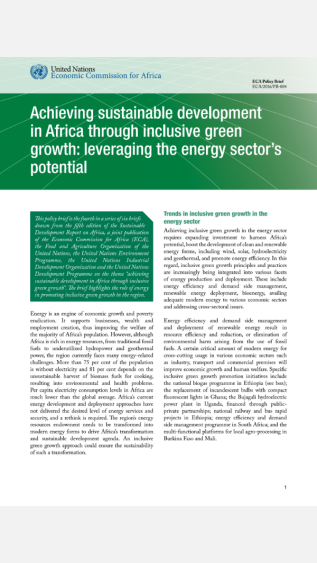
This policy brief is the fourth in a series of six briefs drawn from the fifth edition of the Sustainable Development Report on Africa, a joint publication of the Economic Commission for Africa (ECA), the Food and Agriculture Organization of the United Nations, the United Nations Environment Programme, the United Nations Industrial Development Organization and the United Nations Development Programme on the theme “achieving sustainable development in Africa through inclusive green growth”. The brief highlights the role of energy in promoting inclusive green growth in the region.
This policy brief provides trends in inclusive green growth in the energy sector and addresses challenges and opportunities with regards to the current supply level, policy reforms to improve energy intensity, access as well as efficiency. It provides a short case study on Ethiopia.
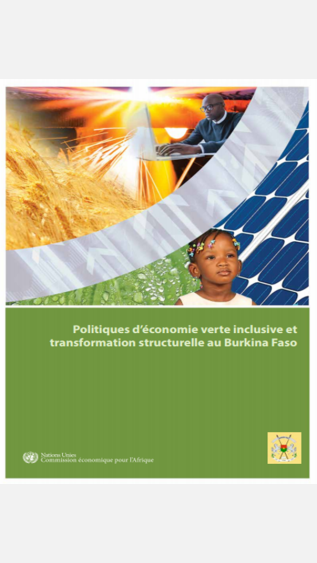
In Burkina Faso, more effective macroeconomic management based on policies to promote sustained and sustainable growth remains a priority goal. However, it is now recognized that maintaining rapid growth is not synonymous with structural transformation or a rapid reduction in poverty. To achieve the above-mentioned goals, growth must be deliberately oriented towards sustainable, inclusive development, predicated in particular on a process of agricultural modernization, industrialization tailored to national circumstances and economic diversification which creates jobs, helps to lower poverty levels and gives wider access to basic services. Accordingly, an inclusive green economy, designed in a spirit of structural transformation, is increasingly recommending itself in policy and strategy debates as the most suitable way of bringing about sustainable economic and social transformation.