
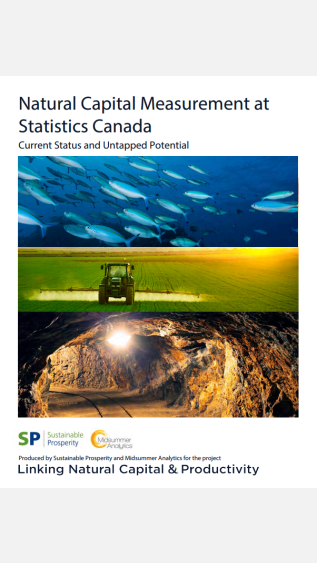
This report Natural Capital Measurement at Statistics Canada provides an overview of Statistics Canada’s efforts to measure the state of Canada’s natural capital (ecosystems, land and sub-soil resources), the demands placed upon it by human activities and the efforts undertaken to manage these demands.

To mark the launch of the GREEN-WIN website, Dr. Jochen Hinkel, Coordinator of the GREEN-WIN Project, explains how the project will further research targeted at uncovering win-win opportunities - i.e. those that are economically attractive for individual countries, regions and firms, which also contribute to climate goals.
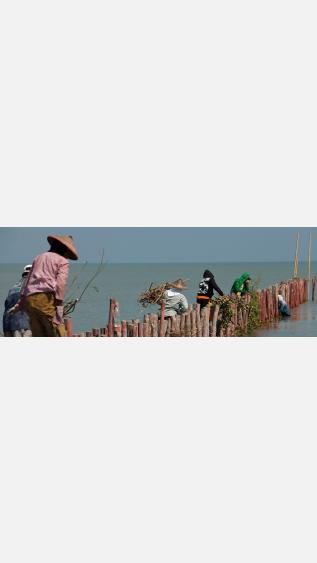
The Green Growth Knowledge Platform (GGKP) has launched a new website to support knowledge transfer around the project, "Green Growth and Win-Win Strategies for Sustainable Climate Action –GREEN-WIN".
An India Advisory Council of the UNEP India Inquiry was convened by the Federation of Indian Chambers of Commerce and Industry (FICCI). This report, Delivering a Sustainable Financial System in India highlights key proposals emerging from their discussions for aligning the Indian financial system with sustainability.
In the Indian context, they call for the development of a more robust and resilient ‘sustainability-oriented market framework’ focused on banking, institutional investment, public finance institutions and foreign direct investment. They called for policy and regulatory innovation in five areas:
By 2022, two billion people will be living in informal settlements according to the United Nations. Although per capita energy consumption in informal settlements is comparatively low, the benefits of energy efficiency uptake – enhanced energy system sustainability, economic development, social development, environmental sustainability, and increased prosperity (International Energy Agency [IEA], 2014) – stand to equally benefit these communities. Yet despite these benefits, informal settlement households – as so many others – have been slow in taking up energy-efficient technologies. This can be partly attributed to behavioural barriers: Consumers often do not invest in energy efficiency in an economically rational manner. Recent research findings point to effective means of implementing behavioural insights for energy efficiency in informal settlements. Building upon this precedence, governments, international organisations and implementing agencies should encourage the application of potentially low-cost behavioural insights to energy efficiency initiatives in informal settlements to improve intervention efficacy.
This is the first in a series of six briefs, drawn from Achieving Sustainable Development in Africa through Inclusive Green Growth, a joint publication of the Economic Commission for Africa (UNECA), the Food and Agriculture Organization of the United Nations, the United Nations Industrial Development Organization and the United Nations Development Programme on the theme of "achieving sustainable development in Africa through inclusive green growth". This brief provides a snapshot of the key findings, which are further highlighted in subsequent policy briefs in this series.
This policy brief provides an overlook of green growth in a number of sectors, including agriculture, ecosystem goods and services, energy, industry, and trade. It also examines various enablers for the transition toward a green economy.