
This policy brief is the last in a series of six briefs, drawn from Achieving Sustainable Development in Africa through Inclusive Green Growth, a joint publication of the Economic Commission for Africa (UNECA), the Food and Agriculture Organization of the United Nations, the United Nations Industrial Development Organization and the United Nations Development Programme on the theme of "achieving sustainable development in Africa through inclusive green growth". Specifically, this policy brief looks at the potential to leverage trade in achieving green growth as trade plays an important role in the world economy and can spur economic gorwth on teh African continent. It recognised that while extractives, particularly fossil fuels, raw ores and metals, dominate Africa’s exports to the rest of the world, African countries can achieve inclusive green growth within a highly globalized and competitiven world market by harnessing their abundant natural resources, which also provide a broad range of benefits across the various sectors of society.
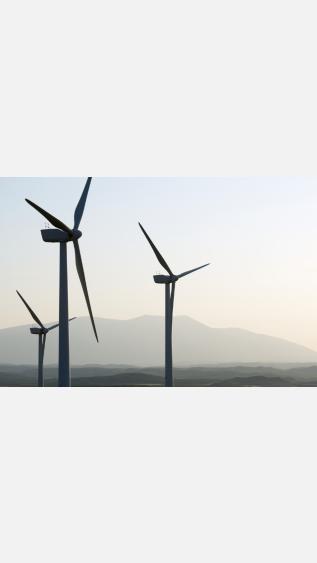
Featuring Edgar Hertwich, Yale School of Forestry & Environmental Studies Professor of Industrial Sustainability, member of the UNEP International Resource Panel
Bhutan 2020: A vision for peace, prosperity and happiness II prioritizes the future and sets out the main directions that enable the nation to mainatin its distinctive path of development in the next century. It identifies a hierarchy of goals, objectives and principles and presents the central development concept that is essential for understanding the distinctive approach to development.
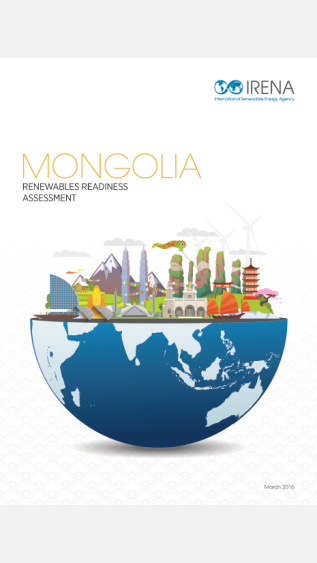
Mongolia can use its vast renewable energy resources to bolster energy security, reduce pollution, meet global climate commitments and develop regional electricity exports, finds Mongolia Renewable Readiness Assessment prepared jointly by IRENA and Mongolian Ministry of Energy.
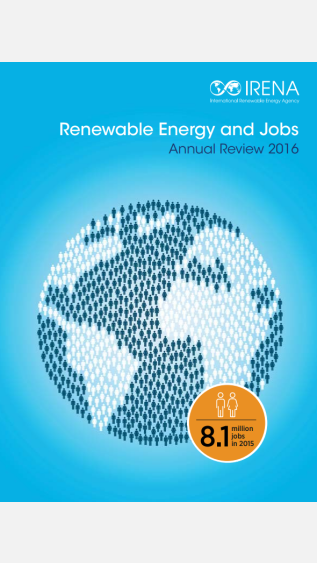
Renewable Energy and Jobs – Annual Review 2016 presents the status of renewable energy employment, both by technology and in selected countries, over the past year. In this third edition, IRENA estimates that renewable energy employed 8.1 million people around the world in 2015 (excluding large hydropower). This is a 5% increase from the number reported the previous year. In addition, IRENA conducted a second global estimate of large hydropower employment, showing approximately 1.3 million direct jobs in the sector.
While the growth in jobs slowed down compared to previous years, the total number of jobs in renewables worldwide continued to rise, in stark contrast with depressed labour markets in the broader energy sector. Countries with the highest number of renewable energy jobs were China, Brazil, the United States, India, Japan and Germany.
China’s introduction of a national ETS, scheduled for 2017, is an important development in the expanding carbon market landscape. As countries move towards implementation of the recently-adopted Paris Agreement, this sends a powerful signal about China’s mitigation commitment and support for carbon markets. As the largest emitter of greenhouse gases and a key player in world trade, China’s move to a nation-wide ETS can have significant implications for the future of carbon markets around the world.