
The Government of India has set ambitious renewable energy targets for 2022, in order to achieve its climate goals and enhance energy security. Given India’s budget constraints, a cost-effective policy path will be crucial to achieving these targets. One way to reduce the cost of government support needed to achieve its renewable energy targets is through the tariffs it uses to procure renewable energy.

Energy efficiency has a plethora of benefits on the individual, organisational, and social levels. However, there is still a gap between knowledge and implementation. While market failure serves as an important barrier to energy efficiency uptake, so do the characteristics of human behaviour. Literature on human behaviour reveals many entry points for the inclusion of ‘behavioural insights’ in the design of energy efficiency programmes.
Drawing from case studies on small and large industry in Colombia, India, South Africa, and Uganda, this report aims to provide practitioners with illustrations of how insights into human behaviour can be effectively integrated into energy efficiency programmes. The incorporation of behavioural insights should consider four aspects: the cultural context of the target group, windows of opportunity for the intervention, drivers and motivations, and the overall fit of the intervention with the package of measures.
This report discusses the current situation of the energy efficiency sector in India, delves into some of the causes hindering the development of this market and explains why the lack of commercial bank financing is one of the main barriers for attaining higher energy savings. The discussion then moves to proposing two innovative business models to overcome this funding barrier. The first model is a bespoke financing protocol that would serve as a blueprint for banks to reduce perceived risks, learn how to appraise energy savings as cash flows to back loans, and launch energy efficiency as a new credit line. The second proposal is a business model for energy efficiency deal aggregation as a viable strategy for banks to deleverage their balance sheet while creating a broader investor base for energy efficiency projects.
This report presents the status of renewable energy employment, both by technology and in selected countries, over the past year. In this second edition, IRENA estimates that renewable energy employed 7.7 million people, directly or indirectly, around the world in 2014 (excluding large hydropower). This is an 18% increase from the number reported the previous year. In addition, IRENA conducted the first-ever global estimate of large hydropower employment, showing approximately 1.5 million direct jobs in the sector.
The 10 countries with the largest renewable energy employment were China, Brazil, the United States, India, Germany, Indonesia, Japan, France, Bangladesh and Colombia. The solar PV industry is the largest renewable energy employer worldwide with 2.5 million jobs, followed by liquid biofuels with 1.8 million jobs, and wind power, which surpassed 1 million jobs for the first time. The employment increase extends across the renewable energy spectrum with solar, wind, biofuels, biomass, biogas and small hydropower all seeing increases in employment.
The science is unequivocal: stabilizing climate change implies bringing net carbon emissions to zero by 2100 if we are to keep climate change anywhere near the 2°C warming that world leaders have agreed on as the limit. Decarbonizing Development: Three Steps to a Zero-Carbon Future looks at what it would take to decarbonize the world economy by 2100 in a way that is compatible with countries’ broader development goals. The book argues that all countries must:
(i) Plan ahead with an eye on the end-goal so as to enact the right policy mix that will allow them to take advantage of options that offer immediate local co-benefits while taking actions that will allow them to reach the long term objective and avoid locking in carbon-intensive patterns and higher future expense.
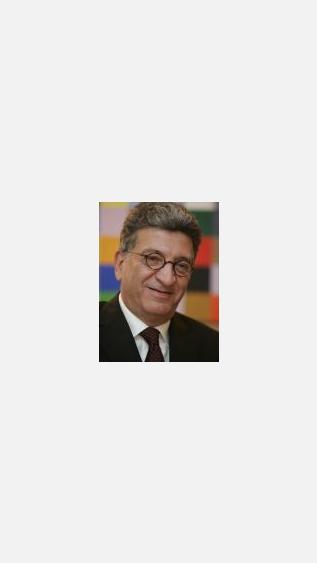
Najib Saab, Secretary-General of the Arab Forum for Environment and Development reflects on recent investment trends in renewable energy and its growing importance in the energy balance.