
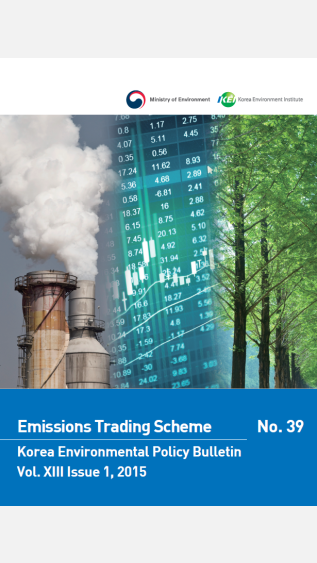
This paper, Korea Environmental Policy Bulletin: Emissions Trading Scheme, introduced the operation of the Korean Emission Trading Scheme (ETS). Korea's greenhouse gas (GHG) emissions have continued to increase over the decades.

This policy brief focuses on large hydropower infrastructure in sub-Saharan Africa. It investigates the climate change risks and the use of climate services in decision-making and makes recommendations for actions to enhance the resilience of hydropower schemes. It summarises a more comprehensive paper prepared to support the scoping phase of the Future Climate for Africa (FCFA) programme for the hydropower sector.

Current models examining the possible implications which changes towards a low-carbon economy may reflect for low-income countries include a look at best practices from countries such as Kenya, Cambodia and Nepal, some of which may also prove relevant for the Caribbean context. To this end, ten key measures were identified by the Overseas Development Institute (ODI) which could help such countries to remain competitive in a future low-carbon global economy. These ten measures further assisted in examining the Caribbean context and may be seen to sum up the various observations and recommendations already examined within this paper.
Pathways to Scale, the Inquiry`s third progress report, explores how innovative ideas and practices can be made more effective, adopted more widely, and taken to scale—and as a result move the trillions that are required. Scaling-up proven but limited innovations, is a common development challenge, requiring the adept handling of inevitable technical and institutional barriers, and the creation of viable pathways which can overcome outdated but often resilient conventional wisdoms.
The world today is facing the worst economic and environmental crises in generations. Hence, we need policies that can stimulate recovery and at the same time reach the sustainability. Many organisations and experts have advocated for a 'green recovery', where the economic crisis should be grasped by governments as an opportunity to reduce carbon dependency and put economies on a path of 'green growth' by using green stimulus packages. Many papers and international reports advocate that the renewable energy sector is an essential step in the path of green recovery. The main aim of this paper is to review a selection of responses to the double crisis by international institutions and to focus on the achievements made in the renewable energy sector.

In this special edition of the GGKP "Insights" blog, Dr. Carlo Carraro, Dr. Suneel Pandey and Dr. Steven Stone, organizers of the GGKP's next Annual Conference, present the case for using fiscal policy to achieve economic, social and environmental goals - outlining the opportunities and challenges which exist in practice.