

Shelagh Whitley, Overseas Development Institute (ODI), discusses a new ODI report that reveals that G20 governments are continuing to subsidise exploration for fossil fuels, despite strong warnings from the IPCC about the impact of climate change.
In 2016, the European Council approved the new climate and energy targets that would lead the EU action through to 2030. While these policies mark progress towards the EU’s long-term decarbonization objective, there are some contradictions to consider. Most notably, although the 20-20-20 package was in place, in the last few years the energy mix of some EU countries showed an increased reliance on fossil fuels. In addition, total emissions in Europe declined, but mainly because the economic crisis reduced energy demand in many EU Member States. The new European framework therefore comes at a critical time particularly because the 2030 policy commitments should be able to cope with this contradictions and actually promote investment into low-carbon sources. The article will explore these issues by discussing what would be the consequences of these targets into the energy market.
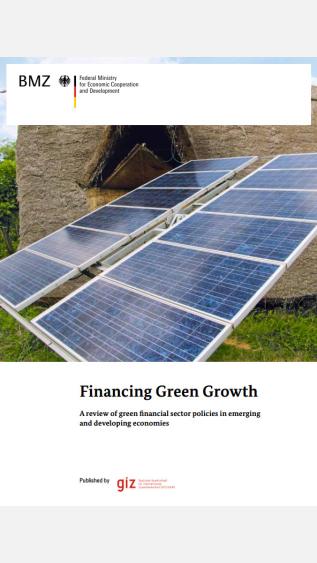
This study highlights the role of the entire financial system in the transition to a green economy and reviews green financial sector policies in emerging and developing economies. It focuses on the political and legal framework conditions, which are essential for a successful financing for green growth. On the basis of ten case studies in emerging and developing countries, the study investigates which strategies, policies and specific policy instruments have been applied at the national level, and how these have directly or indirectly influenced the actions of organisations operating in the financial sector. The study also aims to provide an analytical framework for key stakeholders (governments, donor institutions and the private sector), providing guidance before initiating and building a conducive framework for financing green growth.
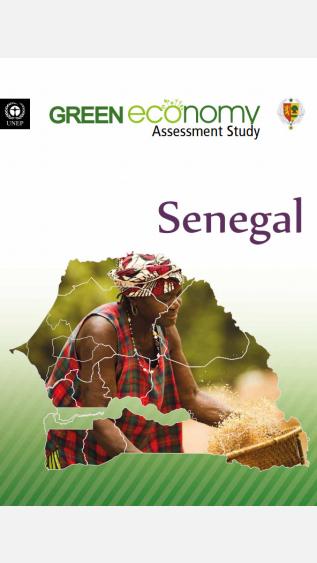
This Exploratory Report on the Green Economy (ERGE) Green Economy Assessment Study - Senegal was created under the Green Economy Initiative launched by the United Nations Environment Programme (UNEP) in 2008. It aims to enable Senegal to seize the opportunities offered by the green economy.
Going Green at the Grassroots narrates how the Inter-American Development Bank (IDB), in partnership with Nordic Development Fund (NDF), is working with companies across Latin America and the Caribbean to harness the enormous potential of energy efficiency and small-scale renewable energy. The IDB has conducted more than 30 energy efficiency audits and feasibility studies across a range of sectors, from shrimp farming to clothing manufacturing to dairy operations. Energy engineering specialists perform energy audits, self-supply renewable energy assessments, financial feasibility studies and develop project design plans in Central America. This case study illustrates how a private sector initiative is gaining steam in Central America and demonstrating, company by company, the feasibility and appeal of renewable energy.
This research investigates the profitability of biofuels production in Africa, taking Ethiopia as a case in point, and suggests an oil price threshold beyond which biofuel may be profitable. Specifically, the study analyzes the viability of bioethanol from molasses and biodiesel from other feedstock in the context of Ethiopia, using data from a biofuels investment survey by EEPFE/EDRI in 2010, and makes estimates based on field visits.