

In this provocative paper, PCI Executive Director Asher Miller and Transition Movement Founder (and PCI Fellow) Rob Hopkins make a convincing case for why the environmental community must embrace post-growth economics and community resilience in their efforts to address the climate crisis.
This study represents a first attempt within Australia to explore the extent to which a green economy is emerging within different sectors of industry. Its emergence is underway within the energy sector (Newton and Newman, 2013); less so elsewhere. For the built environment sector, given its critical role in sustainable urban development, it is important to understand where the industries that constitute this sector are headed.
The survey on which this report is based probes senior managers in both private and public sector organisations in relation to:
- Perceptions of their current operating environment
- Corporate strategies
- Green business opportunities
- Areas where government can assist business in creating an environment conducive to low carbon green growth.

The Green Economy is increasingly recognised as a tool to achieve sustainable development. The concept has been adopted by several countries across the globe.
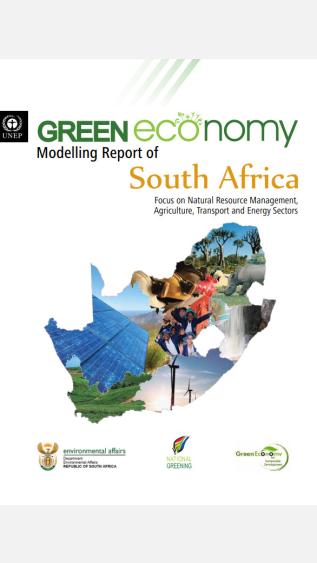
This study Green Economy Modelling Report of South Africa shows that investing in a low-carbon, resource efficient green economy is fundamental for South Africa’s sustained economic growth and well-being.
Regional Trade Agreements (RTAs) are increasingly used for addressing sustainable development goals by including provisions on climate change and sustainable energy. This paper examines that trend and presents an overview of different categories of such provisions in a broad sample of recent RTAs, identifying current regulatory challenges and highlighting obstacles in addressing climate change. It appeals to the necessity of securing flexibility for regulators in targeting new climate threats and the need for cooperation to implement international and national objectives in the efforts to enhance low-carbon technologies. After a preliminary assessment of the potential legal effects of the provisions, the authors make recommendations intended to optimize the potential of promoting the development of a sustainable low-carbon economy through trade agreements.
This report traces the debate, analysis and action on the water, food and energy (WFE) security nexus.