

UNEP and the European Patent Office have released a study which aims at providing facts and evidence to evaluate the actual situation concerning patenting of clean energy technology in Africa.
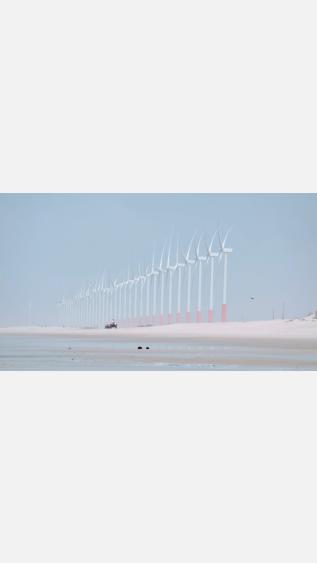
This paper offers an initial assessment of the use, potential usefulness and legality of local content requirements (LCRs) in renewable energy policy. By scrutinising existing empirical evidence on LCRs, the authors identify a number of initial basic conditions that determine the effectiveness of such measures in creating domestic industries. The paper provides an in depth analysis of the wind LCR in China, and descriptive analyses of other LCRs used in the promotion of renewable energy around the world. It further qualitatively addresses the question whether or not local content requirements and medium-term innovation could be aligned. Finally, it discusses the legality of the measures under WTO law.
Other case studies include Canada, Spain, Italy, France, Greece, Croatia, the United States, India, Brazil, South Africa and Turkey.

The focus of this paper World in Transition: Governing the Marine Heritage is on the rules governing the conservation and sustainable use of the oceans, and above all on how we can ensure that these rules are implemented.
Renewable energy markets, industries, and policy frameworks have evolved rapidly in recent years. This report provides a comprehensive and timely overview of renewable energy market, industry, investment, and policy developments worldwide. It relies on the most recent data available, provided by a network of more than 500 contributors and researchers from around the world, all of which is brought together by a multi-disciplinary authoring team. The report covers recent developments, current status, and key trends; by design, it does not provide analysis or forecasts.
The cost of energy in Eastern Europe and Central Asia, as elsewhere, is an important policy issue, as shown by the concerns for energy affordability during the past harsh winter. Governments try to moderate the burden of energy expenditures that is experienced by households through subsidies to the energy providers, so that households pay tariffs below the cost recovery level for the energy they use. Balancing competing claims- fiscal and environmental concerns which will push for raising energy tariffs on the one hand and affordability and political economy concerns which push for keeping tariffs artificially low on the other is a task that policy makers in the region are increasingly unable to put off. While challenging, the reforms needed for this balancing act can build on much that has been learned in the last decade about improving the effectiveness of social assistance systems and increasing energy efficiency.
In recent years the manufacturing of renewable-energy technologies has become truly global. The associated rise in international investment and trade in goods and services related to renewable energy has been rapid, but it has not always been smooth. Already there have been challenges at the WTO, and the unilateral imposition of countervailing and anti-dumping duties, in response to some countries‘ policies on the grounds that they distort trade. Against this background, this paper surveys, through the lenses of market-pull and technology-push policies, the numerous domestic incentives used by governments to promote renewable energy, focusing on those that might have implications for trade — both those that are likely to increase opportunities for trade and those that may be inhibiting imports or promoting exports. Many OECD countries, and an increasing number of non-OECD countries, have established national targets for renewable energy. To help boost the rate of penetration of renewable energy in their economies, most of the same countries are providing additional incentives.