

Advancing Sustainable Energy was prepared for the occasion of the Asian and Pacific Energy Forum (APEF) as an up-to-date catalogue of UN-Energy Asia-Pacific - its members, case studies and an assessment of member organizations' perspectives on enhanced energy security. ESCAP is the secretariat for UN-Energy Asia-Pacific, a part of the global coordination group UN-Energy. 10 members participated in the questionnaire to gather information for this publication. Stakeholders, especially in member States, can read this booklet to get the most comprehensive one-stop understanding of the vision, strategy and activities of ADB, ESCAP, FAO, UNCCD, UNCDF, UNDP, UNEP, UN-Habitat, UNIDO and World Bank on energy in the Asia-Pacific Region. This product aims to raise awareness and coordination, as well as inspire ideas for improving and initiating partnerships between countries, the United Nations and all development partners.
Statistical Perspectives is a compilation of original graphs and charts covering the energy context and 7 areas of focus for realizing enhanced energy security as envisaged in the Asian and Pacific Energy Forum (APEF): energy access, energy efficiency, renewable energy, energy and environment, energy economics, energy trade and investment, energy connectivity. Various methods of data visualization are used to present statistics in a dynamic way, with no text, only the graphs and charts. While produced specifically to support negotiations in APEF, the subject matter addresses energy's role in multiple contexts, environmental, economic and social, across the member States of ESCAP in the Asia-Pacific region.
Africa has a huge untapped potential for generating clean energy, including enough hydroelectric power from its seven major river systems to serve the whole continent’s energy needs, as well as great potential for solar energy, wind energy, geothermal energy etc. Although major hurdles exist also in the distribution of energy, this paper argues that there is potential for Africa to leapfrog existing fossil fuel energy sources and exploit clean energy from the outset to meet its developing needs. The report focuses on the patent landscape for clean energy technologies (CET) in the continent, as a specific geographical area which could greatly benefit from their use and technology transfer in this area. The study provides facts and evidence to evaluate the actual situation concerning patenting of CET in Africa. It helps to understand how the global and African patent systems can best be used and further developed to support and facilitate the technology transfer of CETs in Africa.
This summary was prepared by Eldis.
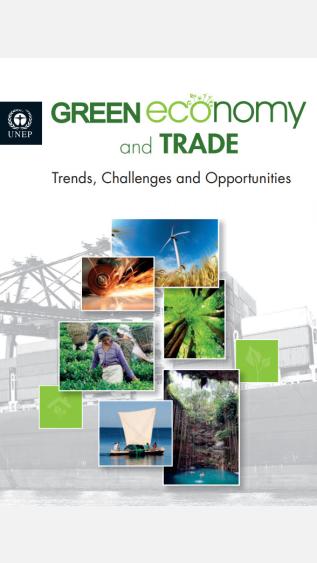
The report begins by introducing the concept of a green economy and the types of opportunities arising from the transition, namely trade in environmental goods and services, standards and certification, and the greening of global supply chains.
Low income countries (LICs) require very large investments if they are to move to a trajectory of inclusive green growth. The most important sector for inclusive green growth is energy, both in terms of increasing generation from renewable sources, and improving the efficiency with which energy is used. This paper explores how additional private investment can be attracted into the energy sectors of LICs in both these areas at the scale and in the form needed.
A new report from the International Monetary Fund (IMF) explores the issue of energy subsidies, including their consequences, fiscal and economic costs, as well as key elements for subsidy reform.