

Sustainable infrastructure will provide the services and foundation for growth that are needed to reduce poverty and boost shared prosperity – but to get there, we must substantially increase financing for infrastructure in the developing world.
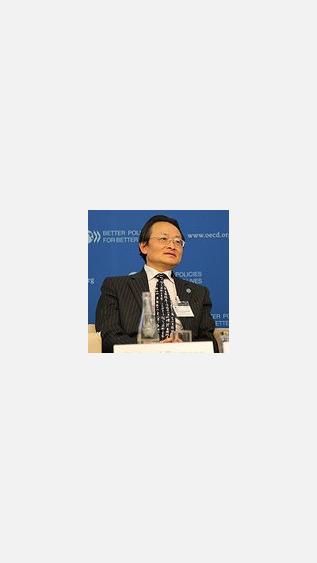
"Making sure the Belt and Road Initiative is sustainable requires a myriad of tailored guidance, tools, best practices, and strategic thinking. It requires the active involvement of those with the knowledge and expertise to build green," says Sheng Fulai, Senior Economist at the UN Environment.
The report Transport in Nationally Determined Contributions (NDCs) summarises case study findings from rapidly-motorising countries, including Bangladesh, Colombia, Georgia, Kenya, Nigeria, Peru and Viet Nam. It highlights the shared challenges they face in developing and delivering greenhouse gas mitigation actions within expanding transport sectors. These include the impact that a lack of transport data is having on sectoral climate action and the need for increased buy-in from key transport stakeholders to achieve countries’ climate change commitments. The report also highlights the need to build climate change expertise within transport authorities, and for greater alignment between NDCs and national transport sector strategies.
Transportation mode choices, distances traveled and resulting CO2 emissions are influenced by transport infrastructures. The latter will either lock-in transport patterns in high-emitting modes or accompany low-carbon pathways. At the same time, future mobility demand increase requires rapid build-up of new infrastructures and upgrade of existing ones. Here the authors quantify investments needs for transport infrastructures over time to reach both development and climate objectives in different world regions. Investments needs between world regions are compared and the main factors determining investment needs for each region are analyzed. To do so, the authors build an ensemble of socio-economic scenarios with the integrated assessment model Imaclim-R combining alternatives on model parameters determining mobility patterns. The authors estimate the investments consistent with the passengers and freight transportation trends in the scenarios and identify their main determinants.
Feasibility assessment has been conducted in order to make a decision for investment on transportation infrastructure in Korea. With respect to the feasibility assessment, the Ministry of Finance has conducted a pre-feasibility study and the Ministry of Land, Infrastructure and Transportation has implemented a feasibility evaluation. However, the methodology for real application in consideration of deep uncertainty has been limited to a sensitivity analysis and scenario evaluation. In this regard, the Korea Transport Institute (KOTI), which is under the Prime Minister’s Office, is currently conducting a case study in order to come up with a practical methodology for DMU techniques application. As the outcome of this process, KOTI has developed suitable DMU techniques for Korea and applied them to the past case on that basis. With definition of uncertainties on transportation infrastructure, KOTI is planning to present implications and limitations, and explain the efforts that should be implemented in order to apply them in Korea in the future.
As a prelude to scaled-up deployment of electric vehicles, this paper examines the economic feasibility of replacing the current fleet of fossil fuel taxis in Seoul with electric vehicle (EV) taxis by phasing the former out based on their opertional lifetime. In the cost-benefit analysis for such a transition, costs of purchasing vehicles and constructing and maintaining charging infrastructure are estimated based on the market prices and characteristics of taxi transport in Seoul. On the benefit side, the avoided environmental costs due to reduced air pollutants and greenhouse gas emissions are calculated. The transport planning model, especially traffic assignment, is incorporated in the calculation process for a better estimation of the avoided costs through more accurate link flows and speeds on the road network. Savings from the fuel switch to electricity from liquefied petroleum gas for taxis are also estimated. The resultant benefit-cost ratio signifies economic viability of the deployment of EV taxis. The results of the study are encouraging and could be a good piece of rationale to push forward with electric vehicles.