

Over 20% of the global population – 1.4 billion people – lack access to electricity. Some 40% of the global population – 2.7 billion people – rely today on the traditional use of biomass for cooking. In this report, the IEA estimates that an investment of $36 billion per year is needed to ensure that every person in the world benefits from access to electricity and clean cooking facilities by 2030.
This report was originally presented on 21 September 2010 on the sidelines of the United Nations Millennium Development Goals (MDG) Summit in New York at a dinner hosted by UN Secretary-General Ban Ki-Moon.
Smart ICT and Internet applications have the potential to improve the environment and tackle climate change. Top application areas include manufacturing, energy, transport and buildings. Information and communication also foster sustainable consumption and greener lifestyles. At the same time, direct and systemic impacts related to the production, use and end of life of ICTs require careful study in order to comprehensively assess “net” environmental impacts. A better understanding of smart ICTs provides policy makers with options for encouraging clean innovation for greener economic growth. This summary was prepared by Eldis.
Moving towards low-carbon, high-efficiency energy systems, mitigating climate change, securing energy supplies, and resolving the imbalance of payments caused by energy imports, are impending problems that nations worldwide are striving hard to resolve. This paper addresses three aspects of this problem:
- the role of markets, prices, and governments in this energy transformation
- identification of policy interventions that can become productive investments in the future
- the potential for low-carbon, high-efficiency energy to drive green growth
The paper notes that the policy choices for an energy system transformation largely relate to:
The biological sciences are adding value to a host of products and services, producing what some have labelled the “bioeconomy”. From a broad economic perspective, the bioeconomy refers to the set of economic activities relating to the invention, development, production and use of biological products and processes. If it continues on course, the bioeconomy could make major socioeconomic contributions in OECD and non-OECD countries. These benefits are expected to improve health outcomes, boost the productivity of agriculture and industrial processes, and enhance environmental sustainability. The bioeconomy’s success is not, however, guaranteed: harnessing its potential will require coordinated policy action by governments to reap the benefits of the biotechnology revolution.
Economists studying environmental collective action and green governance have paid little attention to gender. Research on gender and green governance in other disciplines has focused mainly on women's near absence from forestry institutions. This interdisciplinary book turns that focus on its head to ask: what if women were present in these institutions? What difference would that make?
Would women's inclusion in forest governance - undeniably important for equity - also affect decisions on forest use and outcomes for conservation and subsistence? Are women's interests in forests different from men's? Would women's presence lead to better forests and more equitable access? Does it matter which class of women governs? And how large a presence of women would make an impact? Answers to these questions can prove foundational for effective environmental governance. Yet they have hardly been empirically investigated.
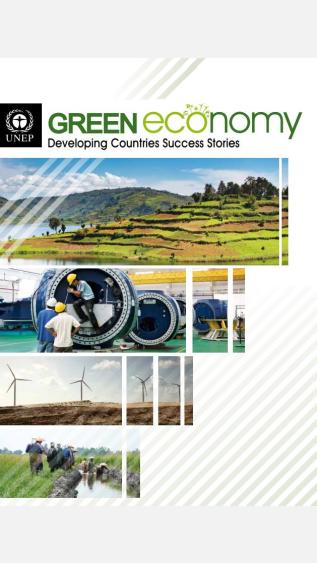
This report from the UN Environment lists 8 different success stories from across the globe on the implementation of the green economy.