
This report, Low Carbon Development Options for Indonesia: Status report and findings, produced by the Ministry of Finance of Indonesia in collaboration with the World Bank, puts forward a series of
Cette rapport final reprend les conclusions principales du rapport du même nom. Elle présente les principaux résultats, soulignant nettement que la préservation et la bonne gestion des ressources naturelles est un facteur important de la croissance économique et de la lutte contre la pauvreté.
Cette note de synthèse reprend les conclusions principales du rapport du même nom. Elle présente les principaux résultats, soulignant nettement que la préservation et la bonne gestion des ressources naturelles est un facteur important de la croissance économique et de la lutte contre la pauvreté.

This paper suggests a methodology for combining integrated energy planning with integrated resource planning to order to make optimal use of energy resources in a sustainable way.
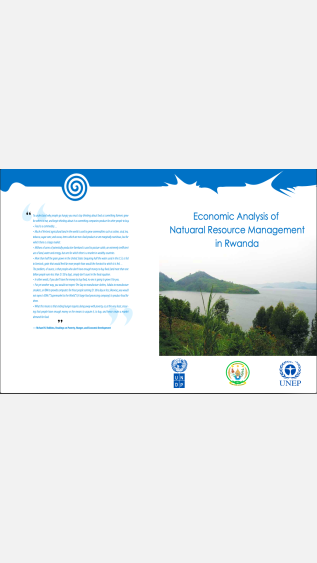
This report is structured around two arguments: firstly, natural resources and ecosystem services in particular have a significant contribution to economic growth and poverty reduction, secondly, failure to manage natural resources, conserve and protect the ecosystem will result in costs of degradation that will compromise medium and long term sustainable development.

This report reviews the economic and environmental consequences of resource inefficiency in Asia and the Pacific and some of its underlying causes. It examines a range of technical, policy, and institutional responses to encourage corporations and consumers alike to adopt more resource-efficient behaviors, with particular attention to the vital role governments must play in creating incentive structures, encouraging research and development for new technologies, improving institutions and information exchange, and other measures to move the region’s economies toward greater resource efficiency. This analysis is a contribution to the global G8 3R Initiative, which seeks to promote the “reduce, reuse, recycle” approach to waste management. While many of the specific strategies described are not new, the report should contribute to an understanding of the underlying reasons behind resource inefficiency, tools for its analysis, and specific interventions tailored to the Asia and Pacific context.
The report includes case studies from China, India, Japan, Lao, Nepal, Philippines and Thailand.