
Over the last two decades, private equity has outperformed other asset classes while growing tremendously, adding $US trillions in assets under management. Based on its recent returns and scale, private equity is more attractive and more influential than ever before. The Changing Climate for Private Equity, a joint research project between the SustainAbility Institute by ERM (the SustainAbility Institute) and Ceres, seeks to understand how deeply climate-related expertise is embedded within private equity firms and to explore what climate performance expectations they impose on the companies in which they invest.
This publication features several case studies around the world where nature-based technologies are being employed to manage the human water cycle.
This working paper, produced in partnership with Ørsted, focuses on the challenges and solutions to scaling investment in renewable energy generation and provides actionable policy solutions to unlock the private sector investment needed to support the energy transition.
This executive summary Towards a Resilient and Sustainable Post-Pandemic Recovery summarises key recommendations for Europe's post-COVID sustainable industrial policy.
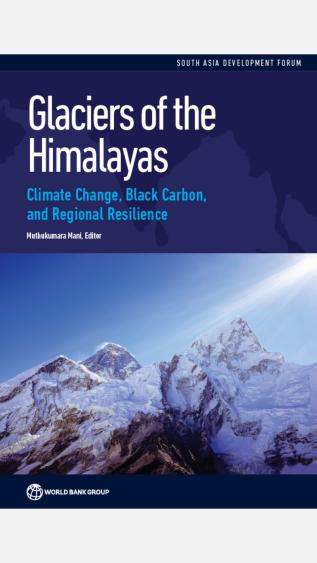
Melting glaciers and the loss of seasonal snow pose significant risks to the stability of water resources in South Asia. Climate change and deposits of anthropogenic black carbon (BC) are the major drivers of the accelerating glacier melt. This report investigates the extent to which the BC reduction policies of South Asian countries may affect glacier formation and melt within the context of a changing global climate. It assesses the relative impact of each source of black carbon on snow and glacier dynamics. The authors simulate how BC emissions interact with projected climate scenarios, estimate the extent to which these glacial processes affect water resources in downstream areas of these river basins, and present scenarios until 2040.
A spirit of inventiveness, innovation, and curiosity has propelled Québec in establishing itself as a circular economy leader. This experience is invaluable for all that are similarly seeking to transition from an unsustainable, wasteful linear economic system to one that reduces waste, captures value, fosters prosperity, and nurtures wellbeing within the planetary boundaries. Québec is distinguishing itself as one of the most advanced regions in circularity in North America. This report highlights the key lessons of the Québec experience between 2014 and 2020.