
This report provides an overview of the challenge that chemicals of concern pose in the context of products relevant for the building and construction sector.
This guide provides key findings and policy recommendations in the areas of mainstreaming and measuring biodiversity, aligning budgetary and fiscal policy with biodiversity, embedding biodiversity in the financial sector, and improving biodiversity outcomes linked to international trade.
In 2020, total expenditure incurred under all of the above-mentioned funding sources amounted to nearly $7 million. Expenditure against donor funds amounted to nearly $2.5 million (outstanding commitments as of 31 December 2020 — i.e. payments due and committed in Atlas but not yet paid out — of $353,197 are excluded from this donor expenditure figure). Expenditure against agency contributions amounted to nearly $3.5 million in 2020. This comprises $2.1 million from UNDP contributed in the form of in-kind resources for staffing and UNDP core funding, and nearly $1.4 million from UNEP contributed as in-kind resources for staffing and operational support. Under country-level co-financing, expenditures of nearly $675,000 were incurred against local donor and partner contributions, and of about $343,000 against government contributions.
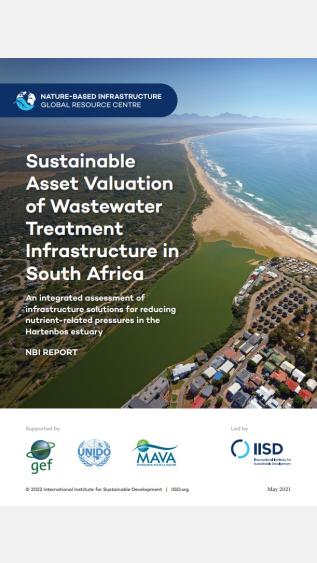
This report provides an integrated assessment of infrastructure solutions for reducing nutrient-related pressures in the Hartenbos estuary.
This report brings together all activities undertaken towards the completion of the comprehensive regional assessment of Solid Waste Management (SWM) in the Caribbean in fulfilment of five specific objectives.
The information generated through this assessment will be used to springboard Belize to sign and later ratify the Minamata Convention on Mercury.