
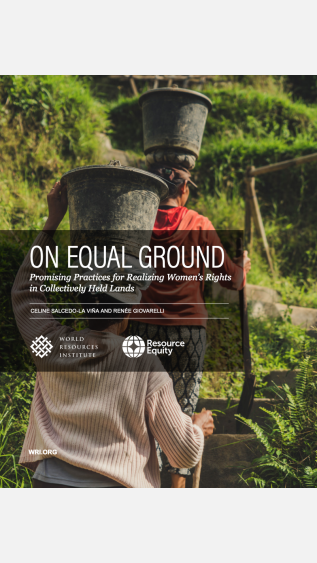
This report seeks to advance women’s tenure rights in collectively held lands by documenting promising practices and approaches gleaned from communities where women have recognized and secure rights. World Resources Institute (WRI) partnered with Resource Equity and organizations in five countries to identify and conduct case studies of five communities that have relatively gender-equitable land tenure systems.
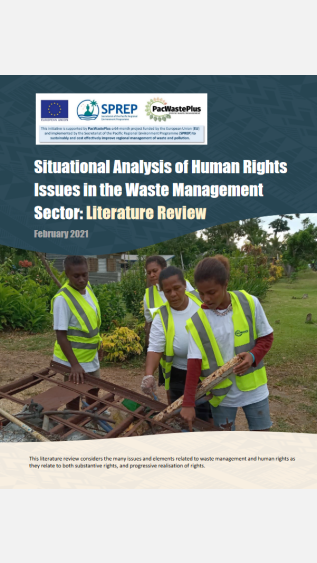
The human rights issues explored in this literature review are those that have been recognised by international bodies and the courts as being implicated by waste. These include substantive rights regarding exposure to waste such as right to life, health, safe and healthy work, among others detailed below. It also encompasses human rights to information and participation.
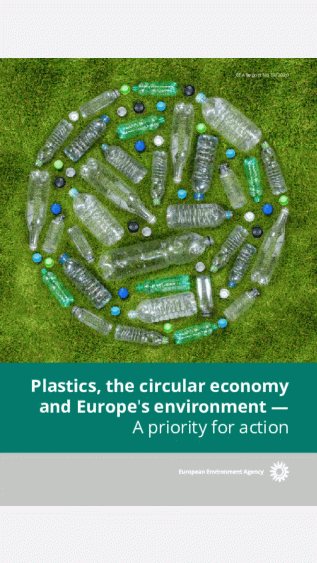
This report introduces the wide family of plastics and briefly explores the main challenges involved in transitioning towards a circular plastics economy.
In this brief, four questions are addressed from the perspective of livestock systems: (1) How can food systems emerge strengthened from the COVID-19 pandemic? (2) How can the agricultural sector contribute to preventing further pandemics? (3) How can food systems become more climate-resilient? and (4) How can food systems contribute to climate change mitigation better than before?

This research paper profiles the state and trends in wastewater management and sanitation delivery in Africa; highlights the human health and ecosystem impacts of poor sanitation and wastewater management; and discusses the continent’s policy and institutional arrangements.
The Dasgupta Review sets out a new framework, grounded in ecology and Earth Sciences, yet applying the principles from finance and economics to understand the sustainability of our interaction with nature and prioritize efforts to enhance nature and prosperity.