
The Green and Sustainable Chemistry: Framework Manual aims at unpacking various topics relevant for green and sustainable chemistry literature, facilitating a better understanding and providing guidance to countries and stakeholders relevant for advancing green and sustainable chemistry.
It addresses the questions of “Why” is green and sustainable chemistry needed and “What” does it aim to achieve, and in which specific innovation areas. Enabling tools and measures to advance green and sustainable chemistry are explored to show the “How”.
The Framework Manual was requested to be developed by the UNEA 4 in 2019, resolution 4/8 on the sound management of chemicals and waste. It builds on the 2019 UNEP report “Analysis of Stakeholder Submissions on Sustainable Chemistry Pursuant to UNEA Resolution 2/7”, and the GCO-II.
This report summarises knowledge about the environmental impact of single-use plastic packaging for take-away food and alternatives that could potentially replace it.
This guide, developed by UNEP and the World Resources Institute, is a tool to help legislators and policymakers explore options for reducing the harmful impacts of single-use plastic products; by regulating their production and consumption, promoting alternatives, as well as improving the management, recycling and final disposal of single-use plastic waste.
The COP16 Accord has been central to the climate accords since 2009 and is an important symbol of trust. It states: "developed country Parties commit, in the context of meaningful mitigation actions and transparency on implementation, to a goal of mobilizing jointly USD 100 billion per year by 2020 to address the needs of developing countries". As the bedrock of international public finance, the $100 billion commitment can work in concert with all pools of finance, including the large and untapped pools of private finance.
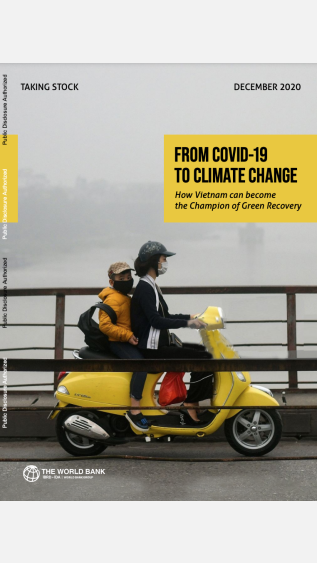
This report asks why Vietnam has not been as effective in dealing with environmental and climate challenges as with the COVID-19 crisis, which are arguably different but have also many similarities. The successful experience in implementing the right measures at the right time during the COVID-19 crisis deserves more attention as it can inspire policymakers in their commitment to address the environmental and climate challenges.
To steer cities through the myriad financing options open to them, C40 Cities and Climate Finance Advisors (CFA) have compiled a finance taxonomy of on- and off-budget resource mobilisation strategies and sources, as well as a broader decision-support framework.